Why coastal Brevard pavers need a different sealing approach
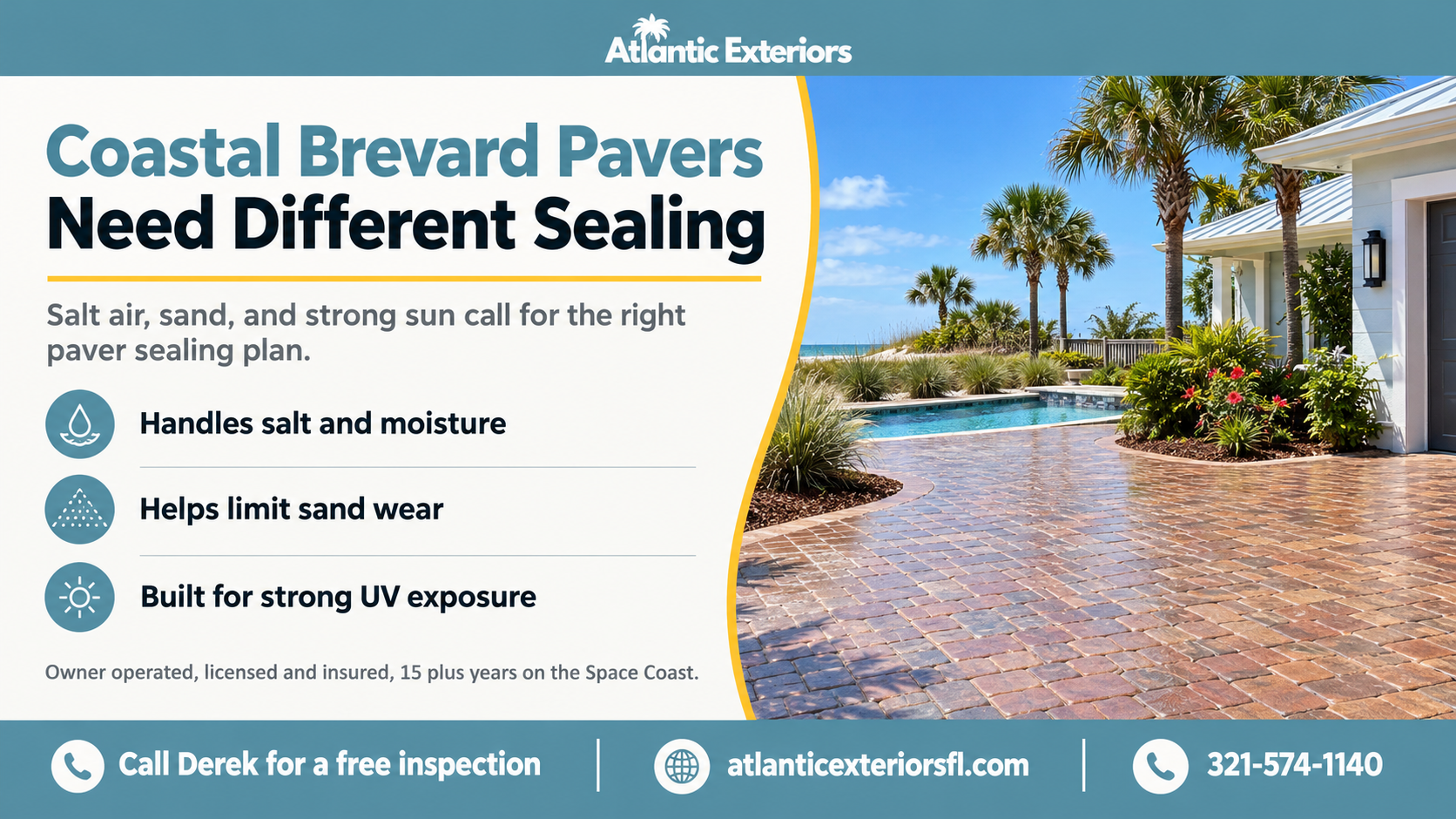
Brevard County homeowners and property managers deal with a little of everything. Strong sun. Humid air. Afternoon storms. Hurricane season. And if you are beachside in places like Satellite Beach, Indialantic, Indian Harbour Beach, Melbourne Beach, Cocoa Beach, or Cape Canaveral, you also get salt air almost every day.
That matters for pavers.
A driveway in Viera or West Melbourne does not age the same way as pavers a few blocks from the ocean. The base may be different. The wear pattern is different. The moisture exposure is different. And the plan for Paver Sealing should be different too.
At Atlantic Exteriors, Derek Perreira personally inspects every project. He works on small residential patios, pool deck pavers, and driveways, but he also handles larger commercial paver sealing jobs for HOAs, storefronts, restaurants, walkways, and parking areas across the Space Coast. If you want a clear opinion on what your pavers need, call Derek directly at (321) 574-1140.
Why beachside pavers age differently
Coastal pavers are under more stress than inland pavers. It is not always dramatic at first. Often it shows up slowly.
You may notice:
- Fading color
- Sand and joint loss
- More mildew or dark areas in damp spots
- A surface that looks dry and tired sooner
- Edges or low spots that hold water after storms
The main reason is exposure. Beachside pavers usually take more wind-driven moisture, more salt in the air, and more direct weather swings. Add summer UV and heavy rain, and the surface can wear faster than the same pavers farther inland in Palm Bay, Rockledge, Cocoa, or Titusville.
That does not mean coastal pavers are a bad choice. It just means the prep, inspection, and maintenance schedule matter more.
Salt air is a real factor on the Space Coast
Salt air is part of life in Brevard County. Near the ocean, it settles on outdoor surfaces over time. On pavers, that can leave them looking dull faster and can make regular maintenance more important.
This is one reason Paver Sealing is not just about shine. A good sealing plan helps protect the surface and makes routine upkeep easier. Derek can walk you through what makes sense for your location during the free inspection.
Coastal paver sealing starts with better inspection and prep
The biggest mistake is treating every job the same.
A beachside driveway in Melbourne Beach should not be approached exactly like a covered patio in Viera. A pool deck near the ocean will usually need different attention than a business entrance in inland Melbourne. Before any sealer goes down, the pavers need to be looked at closely.
At Atlantic Exteriors, every project includes:
- A free on-site inspection
- A written quote
- Post-project follow-up
That first inspection matters most on coastal jobs. Derek checks the condition of the pavers, the joints, drainage patterns, and areas that stay damp longer. He also looks at how much direct sun and weather the surface gets.
Joint sand and drainage matter more near the coast
When pavers lose joint sand, they can start to shift or open up over time. Coastal wind, rain, and foot or vehicle traffic can speed that up. If water is not moving off the surface well, that can add more wear.
This is true for homeowners and commercial clients alike. A residential driveway in Merritt Island and a storefront walkway in Cocoa Beach both need solid joints and good drainage to perform well.
If repairs or restoration are needed before sealing, Derek can point that out during the inspection. It is better to address the condition of the surface first than to rush into sealing pavers that are not ready.
Inland pavers still need protection, but the timing may differ
Inland Brevard pavers still take plenty of abuse. Heat, humidity, pollen, thunderstorms, and summer UV affect all of us from Melbourne and Palm Bay to Rockledge and Titusville.
But inland surfaces often do not deal with the same level of salt exposure as beachside properties. Because of that, the wear pattern can be a little more forgiving in some locations.
In general:
- Coastal pavers often need closer monitoring
- Pool deck pavers usually need more frequent attention than covered patios
- Covered areas can sometimes go longer between services
A typical Paver Sealing cycle is about 2 to 3 years. Pavers near your pool are often closer to 2 years. Covered patios may stretch beyond 3 years. The exact timing depends on exposure, traffic, and condition.
That is why a local owner-operator matters. Derek is not guessing from a script. He is looking at your actual surface in Brevard County and giving you a practical recommendation.
If you want to talk it through, call Derek directly at (321) 574-1140.
Homeowners: what this means for your driveway, patio, or pool deck
For most homeowners, the goal is simple. You want your pavers to look cared for, hold up well, and stay easier to maintain.
If you live beachside, you may need a more watchful approach. That could mean checking your pavers sooner after storms, noticing fading earlier, or planning Paver Sealing on the earlier side of the normal cycle.
This is especially true for:
- Driveways with full sun exposure
- Walkways that stay damp
- Paver sealing around your pool
- Patios exposed to salt air and wind
If you are inland in places like West Melbourne, Viera, or Palm Bay, you still need protection. But your pavers may not age in exactly the same way as a surface right off A1A.
The key is not to wait for major decline. A timely inspection can help you catch smaller issues before they turn into bigger restoration needs.
Commercial properties need the same local thinking
Commercial paver sealing should also match the location.
A restaurant entrance in Cocoa Beach, an HOA walkway in Satellite Beach, or storefront and business-entrance pavers in Cape Canaveral may take more weather exposure than similar surfaces inland. That can affect appearance, maintenance planning, and how often the property should be reviewed.
Atlantic Exteriors works with:
- HOAs and property managers
- Storefronts and retail centers
- Restaurants
- Office and mixed-use properties
- Parking lot paver sealing and entry areas
Some jobs are a few hundred square feet. Others are much larger, up to around 20,000 square feet. Derek is equipped for both. Whether it is a small patio or a larger commercial paver sealing project, the approach starts the same way: inspect the site, understand the exposure, and recommend the right plan.
The value of working with a local owner-operator
When pavers are exposed to Brevard County weather every day, local experience matters.
Atlantic Exteriors is licensed and insured. Derek has more than 15 years of paver experience, and he personally inspects every project. That gives homeowners and business clients a direct line to the person doing the work and answering the questions.
You do not need a hard sell. You need honest guidance on what your pavers need now, what can wait, and whether your coastal location changes the plan.
If you are in Melbourne, Palm Bay, Viera, Rockledge, Merritt Island, Satellite Beach, Indialantic, Indian Harbour Beach, Melbourne Beach, Cocoa Beach, Cocoa, Cape Canaveral, Titusville, or West Melbourne, call Derek directly at (321) 574-1140.
FAQ
Do coastal pavers need sealing more often than inland pavers?
Often, yes. Beachside pavers usually deal with more salt air, moisture, and weather exposure. Many coastal surfaces need closer monitoring and may be serviced sooner than inland ones.
How long does Paver Sealing usually last in Brevard County?
Most paver sealing lasts about 2 to 3 years. Pool deck pavers are often closer to 2 years, while covered patios can sometimes last beyond 3 years.
Can Atlantic Exteriors handle large commercial paver sealing jobs?
Yes. Atlantic Exteriors works on both residential and commercial projects, from smaller home patios to larger HOA, storefront, walkway, and parking area jobs up to around 20,000 square feet.
What is the first step if I am not sure what my pavers need?
Start with a free on-site inspection. Derek will look at the condition, explain what he sees in plain language, and provide a written quote. To talk it through and schedule a visit, call Atlantic Exteriors at https://www.atlanticexteriorsfl.com or call Derek directly at (321) 574-1140.