Florida storm damage on pavers: What’s normal vs serious
Florida storms are hard on outdoor surfaces. Between heavy rain, wind, summer UV, salt air, humidity, and hurricane season, it is normal for pavers to show some wear over time.
But not every change is a true problem. Some things are cosmetic. Some are early warning signs. And some mean it is time to have your pavers looked at before the damage spreads.
If you live in Brevard County, from Melbourne and Palm Bay to Viera, Rockledge, Merritt Island, or Satellite Beach, this is worth knowing. A quick check after a storm can help you decide whether you are seeing normal weathering or something more serious.
At Atlantic Exteriors, Derek personally inspects every project. If you want a clear answer, call Derek directly at (321) 574-1140 for a free on-site inspection and written quote.
What storm-related paver changes are usually normal?
Some storm effects look bad at first, but they do not always mean your pavers are failing.
Temporary dirt, debris, and staining
After a hard storm, it is common to see:
- blown leaves and mulch
- sand or silt washed onto the surface
- pollen stuck in damp areas
- light rust-colored or organic-looking marks from wet debris
This is especially common in places like West Melbourne, Titusville, and Cocoa where yards, trees, and drainage patterns can move a lot of material during afternoon thunderstorms.
These issues may make the surface look older, but they are not always structural damage.
Slight dulling of the finish
Florida sun and rain wear down protection over time. If your pavers look less rich in color after a storm, that may simply mean the existing paver sealing is aging.
That is normal. Most paver sealing lasts around 2 to 3 years in Florida. Pavers near your pool are often closer to 2 years because of water, sun, and regular foot traffic. Covered patios can sometimes go beyond 3 years.
A little joint sand movement
Some minor loss of joint sand after strong rain can happen. Stormwater can move sand, especially on older surfaces or areas that were already due for maintenance.
A small amount of washout does not always mean major failure. But it should be watched.
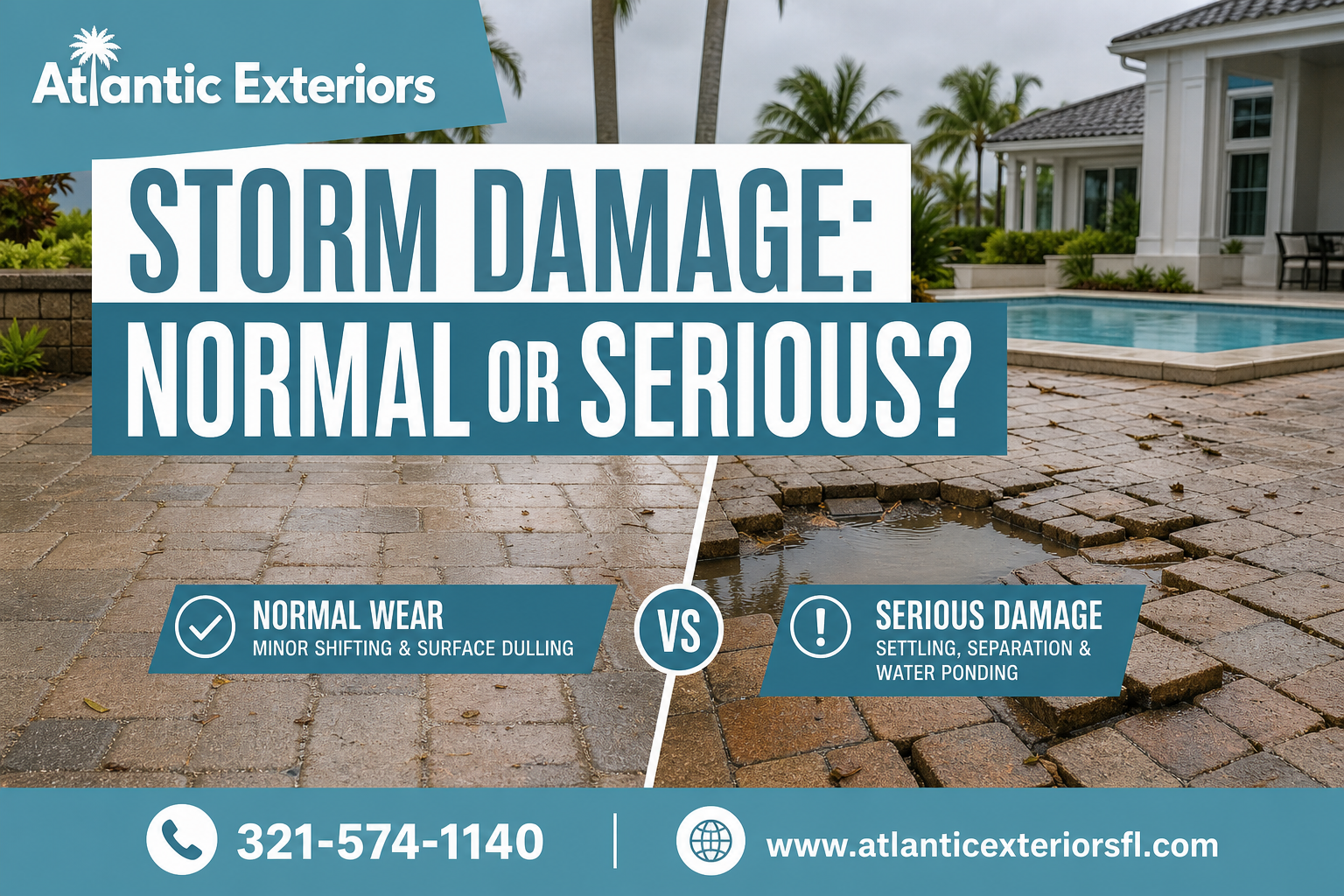
What storm damage on pavers is more serious?
This is where homeowners should pay attention. If a storm exposed an existing weakness, the signs usually show up in the joints, the surface level, or the base underneath.
Sinking, dipping, or uneven areas
If a section of your driveway, patio, or pool deck pavers now feels lower than before, that is more than cosmetic. It can point to base erosion under the pavers.
This is common after repeated heavy rain or poor drainage. In places like Melbourne Beach, Indialantic, Indian Harbour Beach, and Cocoa Beach, water and salt air can speed up wear on already exposed areas.
Watch for:
- low spots holding water
- edges that feel loose underfoot
- pavers that rock when stepped on
- a trip hazard where the surface used to be even
That is a good time to call Derek directly at (321) 574-1140.
Large joint sand loss
If the joints between pavers look empty, widened, or washed out after a storm, the pavers can start shifting. Joint sand helps lock the field together. When too much is gone, movement becomes more likely.
This does not mean the whole area has to be replaced. Often, paver repair & restoration plus fresh paver sealing can correct the issue. Derek can walk you through this on the free inspection.
Standing water that was not there before
One of the biggest warning signs is drainage change. If stormwater now sits on the surface longer than it used to, something may have shifted.
Standing water can lead to:
- faster surface wear
- slippery buildup
- joint erosion
- settling over time
A puddle that lingers after every storm is worth checking.
Signs your pavers may need repair, not just cleaning
A lot of homeowners assume storm damage just means the surface needs to be washed off. Sometimes that is true. Sometimes it is not.
If you notice any of the problems below, the pavers may need repair & restoration before paver sealing makes sense.
Cracked, chipped, or loose border pavers
Border areas often take the first hit. Water runs off edges. Soil can shift there first. Vehicle traffic also puts more pressure on driveway borders.
This matters in neighborhoods across Palm Bay, Viera, Rockledge, and Cape Canaveral where driveways and walkways see years of heat, rain, and movement.
Repeated weed growth in joints
A few weeds do not always mean storm damage. But if weeds keep coming back after storms in the same spots, it can signal open joints, moisture retention, or movement below the surface.
White haze or surface buildup
After storms, some homeowners notice a chalky or cloudy look. That can come from moisture issues, mineral deposits, or older sealer wearing unevenly. It is not always severe, but it should be looked at before new paver sealing is applied.
Why Florida weather makes paver problems worse
Florida is a tough environment for outdoor surfaces. Brevard County homeowners deal with a mix of conditions that keep working against pavers year-round.
The main local troublemakers
- afternoon thunderstorms with heavy runoff
- hurricane season and wind-driven rain
- strong summer UV
- humidity that slows drying
- salt air near the coast
- pollen and organic debris that trap moisture
That is why a small issue in Merritt Island or Satellite Beach can become a bigger one by the next season. Water gets in. Sand moves. The surface loosens. What started as a minor problem can turn into a repair issue later.
Good paver sealing helps protect against this wear, but it is not meant to hide structural problems. If the base or joints are compromised, those need attention first.
What to do after a Florida storm
You do not need to overthink it. A simple visual check goes a long way.
Walk the area and look for changes
Check your:
- driveway pavers
- patio pavers
- pavers near your pool
- walkways and entry paths
Look for fresh low spots, loose edges, missing sand, standing water, and areas that suddenly look patchy or uneven.
If you are not sure what you are seeing, that is exactly what a free inspection is for. Atlantic Exteriors is licensed and insured, and Derek personally inspects every project.
Don’t rush into the wrong fix
If the issue is only surface wear, paver sealing may be the right next step. If the storm exposed movement or washout, repair & restoration may need to come first.
The key is getting an honest assessment. Derek keeps it straightforward. No jargon. No pressure. Just clear advice based on what your pavers actually need.
Call Derek directly at (321) 574-1140 if you are in Melbourne, Palm Bay, Cocoa, Titusville, Melbourne Beach, or anywhere in Brevard County.
When to call Atlantic Exteriors
If your pavers look different after a storm and you are unsure whether it is normal, call. That is often the easiest and least stressful option.
Atlantic Exteriors provides free on-site inspections, written quotes, and post project follow up. If your pavers need sealing, repair, or restoration, Derek can explain the condition of the surface and what makes sense next.
If you are seeing storm-related changes on your driveway, patio, or pool deck pavers, visit https://www.atlanticexteriorsfl.com or call Derek at (321) 574-1140. A quick phone call can help you figure out whether you are looking at normal Florida wear or a problem that should be addressed.
FAQ
Is it normal for paver sand to wash out after a heavy Florida storm?
A little sand movement can be normal, especially on older surfaces. Large gaps or repeated washout are more serious and should be inspected.
How long should paver sealing last in Florida?
Most paver sealing lasts about 2 to 3 years. Pavers near your pool are often closer to 2 years, while covered areas may last longer.
Can storm-damaged pavers be sealed right away?
Sometimes yes, but not if there is settling, loose pavers, or major joint loss. Derek can walk you through this on the free inspection.
Should I call if I only see puddling after storms?
Yes. New standing water is one of the clearest signs something may have shifted. Call Derek directly at (321) 574-1140 to have it checked.