Keep oil drips from staining your driveway pavers
Brevard County driveways take a beating. Between summer heat, salt air, afternoon storms, and daily parking, it does not take much for a small oil drip to turn into a dark stain on your pavers.
If you live in Melbourne, Palm Bay, Viera, Rockledge, Merritt Island, Satellite Beach, Indialantic, Indian Harbour Beach, Melbourne Beach, Cocoa Beach, Cocoa, Cape Canaveral, Titusville, or West Melbourne, you have probably seen it happen. A clean paver driveway starts showing a few dark spots under one car, then those spots spread and become the first thing you notice when you pull in.
The good news is that prevention is a lot easier than trying to fix a deep stain later. And when you already have staining, proper Paver Sealing and restoration can help protect the surface going forward. If you want Derek to take a look, call Atlantic Exteriors at (321) 574-1140. Derek personally inspects every project and provides a free on-site inspection and written quote.
Why oil stains pavers so easily
Pavers are not solid like glazed tile. They have tiny pores that can soak in oil, grease, and other fluids.
Once oil sits on the surface, the heat from the Space Coast sun can help it sink deeper. Then rain and humidity add to the mess by spreading residue into nearby joints and low spots.
A few common causes are:
- Small engine leaks from cars or trucks
- Older vehicles that drip overnight
- Lawn equipment stored near the driveway
- Trash cans with leaking bags or containers
- Restaurant or storefront service areas with delivery vehicles
For homeowners, the usual problem spot is the space where one vehicle parks every day. For commercial properties, it is often near entrances, loading areas, parking stalls, or high-traffic lanes. Atlantic Exteriors handles both residential and commercial paver sealing, from small home driveways to larger HOA walkways, storefront entrances, and parking areas.
The best ways to prevent oil drips on your pavers
The easiest fix is to stop the oil before it reaches the pavers.
Use a drip mat or parking pad
If a vehicle has a known leak, put a drip mat under the engine area. This is one of the simplest ways to protect pavers without changing your whole setup.
Look for a mat made for oil and fluid drips. It should sit flat and be easy to clean or replace.
Fix vehicle leaks early
A slow drip does not stay small for long. One or two spots can turn into a cluster of stains over a few months.
If your car leaves marks in the same place, have it checked. This is especially important in hot Florida weather, where fluids can spread faster across warm pavers.
Move parking positions once in a while
If you have room, avoid parking in the exact same spot every day. This will not stop a leak, but it can help prevent one area from getting all the damage.
For business properties, rotating service vehicles or delivery parking can help reduce repeated staining in one visible area.
Keep trash and equipment off the pavers when possible
Oil is not always from a car. Pressure washers, mowers, generators, and even trash bags can leave dark residue.
If you store lawn tools in the garage, place cardboard, trays, or a mat underneath. If trash cans sit on pavers near the garage or side yard, give them a protected base.
How Paver Sealing helps protect your driveway
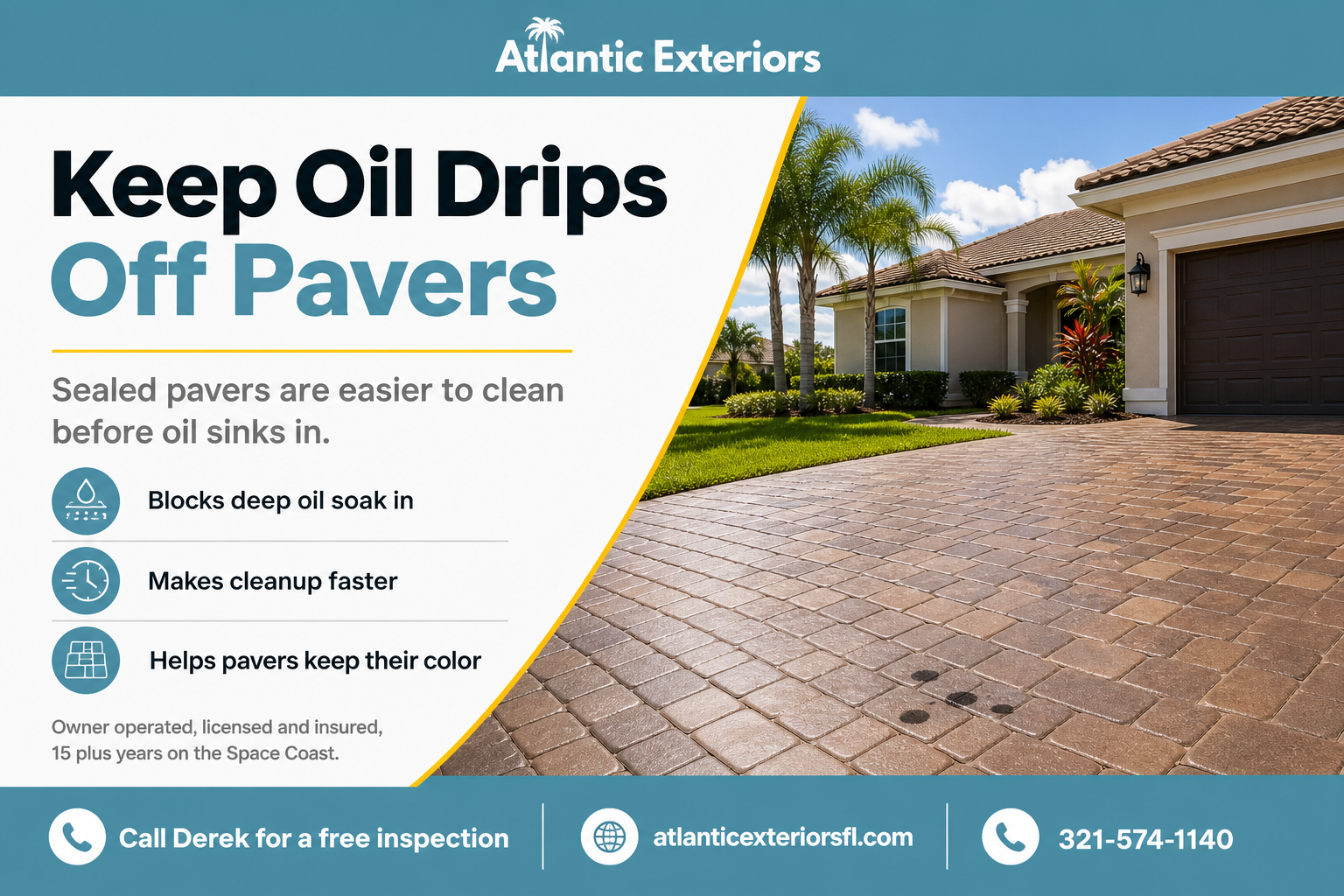
Paver Sealing does not make pavers stain-proof. No honest contractor should say that. But it does add a layer of protection that helps slow down absorption and gives you more time to clean up drips before they sink in.
That matters a lot in Brevard County, where heat, humidity, pollen, and storms all work against outdoor surfaces.
Sealed pavers are easier to maintain
When pavers are properly sealed, oil and grime tend to stay closer to the surface instead of soaking in as quickly. That means cleanup is usually easier if you catch the drip early.
This is one reason many homeowners choose driveway paver sealing after restoration. It helps the driveway stay cleaner and easier to care for between service visits.
Sealing helps with more than oil
Oil may be the main concern, but sealing can also help reduce wear from:
- Rain and standing water
- Sun fade and UV exposure
- Salt air near beachside areas like Satellite Beach, Indialantic, Indian Harbour Beach, Melbourne Beach, and Cocoa Beach
- Dirt buildup in joints
- General surface weathering
For commercial properties, commercial paver sealing can also help maintain a cleaner look at storefront and business-entrance pavers. That matters when customers, tenants, or residents see the same stained approach every day.
If you are not sure whether your driveway is due, Derek can walk you through it on the free inspection. Call him directly at (321) 574-1140.
What to do when you see a fresh oil drip
Fast action gives you the best chance of keeping the spot from becoming permanent.
Blot first, do not spread it around
Use absorbent material right away. Cat litter, baking soda, or an oil absorbent made for garage floors can help pull up fresh fluid.
Let it sit, then sweep it up. Try not to rub the oil deeper into the paver.
Clean gently and early
After absorbing the fresh drip, use a mild cleaner that is safe for pavers. Avoid harsh experiments or random chemical mixes.
If the stain is older or larger, it is smart to stop before you make the area look patchy. Derek can inspect the stain and tell you whether spot treatment, restoration, or Paver Sealing makes the most sense.
Do not ignore the joints
Oil does not only affect the face of the paver. It can move into the joints too.
That is one reason stain issues sometimes look bigger after a rainstorm. If the area around the spot is darkening too, a professional inspection is worth it.
When homeowners and property managers should call a pro
Some stains wipe up. Others keep coming back because the source is still there or the oil has already soaked in.
It is time to call Derek if:
- The same parking spot keeps darkening
- You have several older stains across the driveway
- Your pavers look faded and unprotected overall
- You manage an HOA, storefront, restaurant, or commercial site with visible oil spots
- You want to protect a newly restored paver area before stains get worse
Atlantic Exteriors is licensed and insured, and every project includes a free on-site inspection, a written quote, and a post-project follow-up. Derek works on small residential areas around 500 square feet and larger commercial paver sealing jobs up to about 20,000 square feet.
That means whether you have a home driveway in Viera or a business entrance in Titusville, you can call the same owner-operated company and talk directly with Derek at (321) 574-1140.
FAQ
Can Paver Sealing stop oil stains completely?
No. Paver Sealing helps protect the surface and can slow down absorption, but it does not make pavers immune to oil. Quick cleanup still matters.
How long does driveway paver sealing usually last?
Most paver sealing lasts about 2 to 3 years in Brevard County conditions. Areas with less exposure may last longer, while heavy-use areas may need attention sooner.
Should I seal my driveway if it already has a few oil spots?
Maybe, but the condition of the pavers matters. Derek can inspect the driveway and explain whether cleaning, restoration, repairs, or sealing should come first.
Do you handle commercial paver sealing too?
Yes. Atlantic Exteriors works with homeowners and commercial clients, including HOAs, property managers, storefronts, restaurants, walkways, courtyards, and parking lot paver sealing areas.
If oil drips are starting to stain your driveway pavers, or you want to protect your home or business before the spots spread, call Derek at Atlantic Exteriors at (321) 574-1140. You can also learn more at https://www.atlanticexteriorsfl.com, but the easiest next step is to call Derek directly and schedule your free on-site inspection.