How mold and algae get under unsealed pavers in Florida
Brevard County homeowners and property managers see this all the time. A paver driveway, patio, pool deck, or walkway starts looking dark, patchy, or green around the edges, and before long it seems like the problem is coming from underneath.
That is often exactly what is happening.
Across Melbourne, Palm Bay, Viera, Rockledge, Merritt Island, Satellite Beach, Indialantic, Indian Harbour Beach, Melbourne Beach, Cocoa Beach, Cocoa, Cape Canaveral, Titusville, and West Melbourne, our climate creates ideal conditions for mold and algae under unsealed pavers. Humidity stays high. Afternoon thunderstorms soak the surface. Salt air, pollen, shade, and summer UV all play a part too.
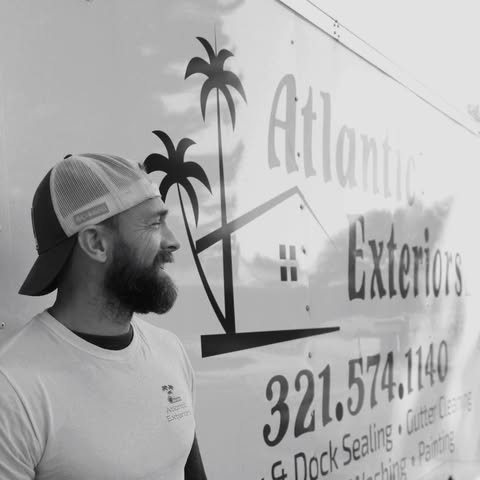
At Atlantic Exteriors, Derek Perreira sees this during free on-site inspections all over the Space Coast. If you want a clear answer about your own pavers, call Derek directly at (321) 574-1140.
Why growth starts under pavers instead of just on top
Most people notice the staining on the surface first. But pavers are not one solid slab. They have joints between them, and those joints matter.
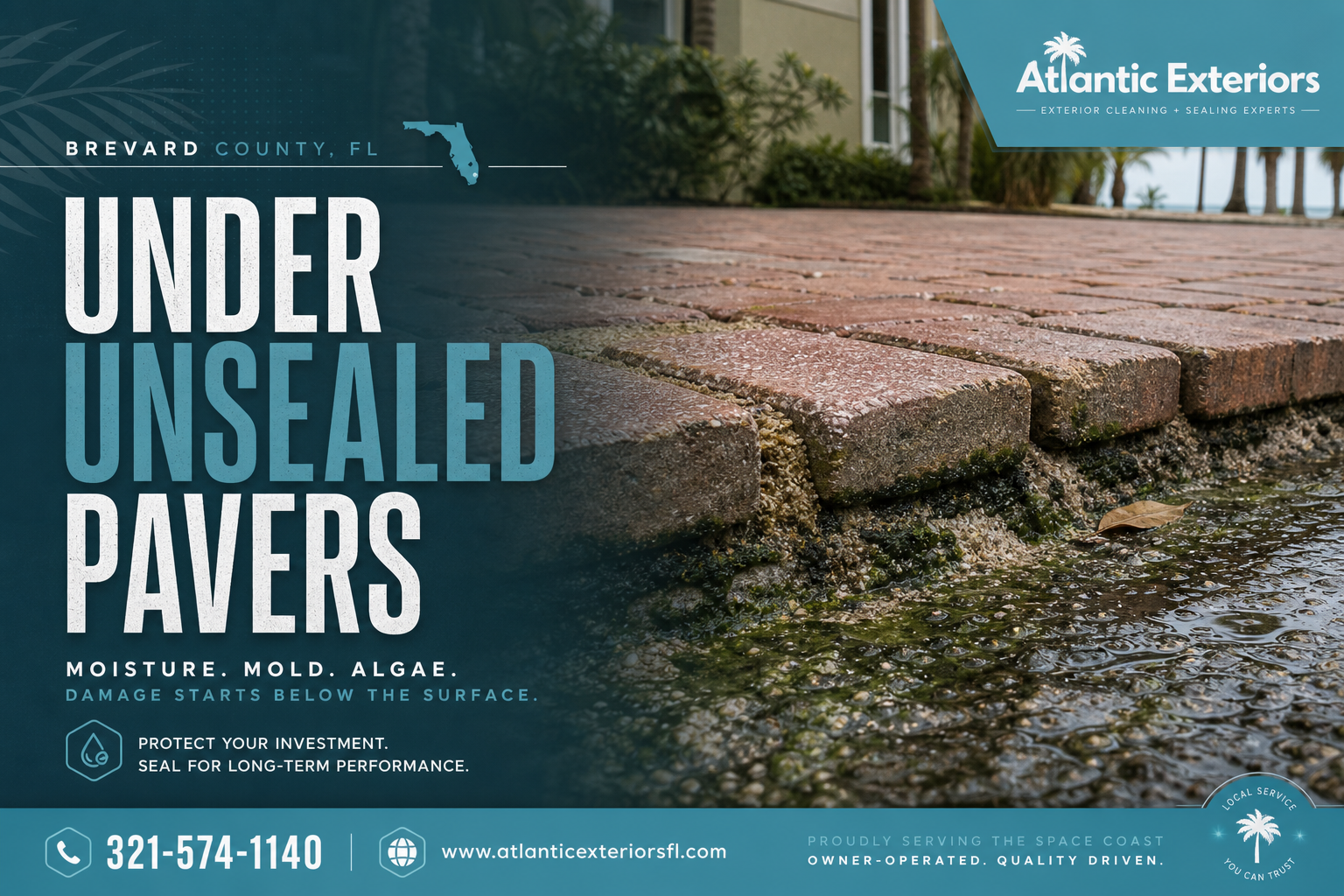
When pavers are unsealed, water can move down through the joints and into the sand bed below. That moisture does not always dry out quickly, especially in shaded areas or places with poor drainage. Once that lower area stays damp, organic material starts building up.
That material can include:
- Dirt washed in by rain
- Pollen and leaves
- Dust and mulch particles
- Moisture trapped in joint sand
- Debris from nearby landscaping
Mold and algae do not need much. Give them moisture, a little organic material, and limited airflow, and they can begin growing below the surface.
Then the growth works its way back up. That is why some pavers keep looking dirty again even after a basic surface cleaning.
Florida weather makes the problem worse
This is not just a "dirty paver" issue. It is a Brevard County weather issue.
Humidity and afternoon rain
On the Space Coast, pavers can stay damp for long stretches. Even when the top looks dry by midday, the lower layers may still be holding moisture.
Frequent rain keeps feeding that cycle. In summer, one storm after another can saturate joints and the base around the pavers.
Shade and poor airflow
Pool deck pavers, side walkways, courtyards, and narrow passages between homes often get less direct sun. That slows drying.
If you have trees, hedges, fences, or a home layout that blocks airflow, moisture stays around longer. That is a big reason algae often shows up in green patches and mold shows up in darker blotchy areas.
Salt air and coastal conditions
In places like Satellite Beach, Indian Harbour Beach, Indialantic, Melbourne Beach, Cocoa Beach, and Cape Canaveral, salt air adds another layer of wear. It does not create mold by itself, but coastal exposure can make surfaces age faster and stay looking weathered.
That is one reason regular paver sealing matters more here than many people realize.
How unsealed joints let the problem spread
The joints are the weak point when pavers are left unsealed too long.
Joint sand helps lock pavers together. But over time, rain, foot traffic, vehicle traffic, and routine weather wear can reduce that sand or shift it around. Once joints open up, more water and debris get below the surface.
That creates a cycle:
- Joint sand weakens or washes down
- Water enters more easily
- Organic material settles below
- Mold and algae begin growing
- Surface discoloration returns faster
For homeowners, this often shows up on driveways, patios, and paver sealing around your pool. For commercial clients, it can show up at storefront and business-entrance pavers, HOA walkways, courtyards, and parking lot paver sealing areas where traffic and drainage are constant concerns.
If you manage a commercial property in Viera, Rockledge, or Melbourne, the issue is not just appearance. Slippery algae growth can become a safety concern too. Derek personally inspects every project, from smaller residential patios around 500 square feet to larger commercial paver sealing jobs up to about 20,000 square feet. Call (321) 574-1140 to talk through the site.
What paver sealing does to help
Paver Sealing is not just about making pavers look better. It helps reduce how much water gets into the system in the first place.
When pavers are properly cleaned, re-sanded as needed, and sealed, the goal is to help protect the surface and joints from moisture intrusion and everyday wear. That can help slow down the conditions that allow mold and algae to develop under the pavers.
What sealing helps with
- Reducing water penetration through the surface
- Helping stabilize joint sand
- Making routine maintenance easier
- Slowing down weather-related wear
- Improving the overall appearance of faded pavers
It is important to keep expectations realistic. Paver sealing does not mean a surface will stay untouched forever. In Brevard County, most paver sealing lasts around 2 to 3 years. Pool deck pavers are often closer to 2 years because of sun, water, and regular use. Covered patios can sometimes stretch beyond 3 years.
If you are not sure whether your pavers need sealing, repair, or restoration first, Derek can walk you through it on the free inspection.
Signs the problem may be below the surface
Sometimes homeowners think they just need a quick wash. But if the issue keeps coming back, there may be more going on.
Watch for signs like:
- Green film returning quickly after cleaning
- Dark staining along joints
- Musty smell in damp shaded areas
- Joint sand thinning out or disappearing
- Pavers that stay damp longer than nearby areas
- Small movement or uneven spots in the field of pavers
For commercial and HOA properties, repeat discoloration around entrances, walkways, and common areas is a common clue. If a storefront entrance or business courtyard never seems to stay clean for long, moisture under unsealed pavers may be part of the reason.
Why local inspection matters on the Space Coast
No two paver areas age the same way. A driveway in West Melbourne may deal with full sun and heavy runoff. A pool deck in Merritt Island may stay shaded and damp. A restaurant patio in Cocoa Beach may get salt air and constant foot traffic.
That is why Atlantic Exteriors handles this with a free on-site inspection, a written quote, and post-project follow-up. Derek is licensed and insured, owner-operated, and personally accessible throughout the job.
If you are in Palm Bay, Titusville, Cocoa, or anywhere else in Brevard County, call Derek directly at (321) 574-1140. He can tell you whether the issue looks like a sealing need, a joint-sand problem, or a larger paver repair and restoration issue.
FAQ
Can mold and algae really grow under pavers?
Yes. When moisture gets through unsealed joints and stays trapped with dirt, pollen, and debris, growth can begin below the surface and show up through the joints or on top.
Will surface cleaning alone fix it?
Sometimes it helps for a while, but if moisture is still getting underneath, the problem may return. Derek can check whether Paver Sealing or restoration makes more sense.
Are pool deck pavers more likely to have this problem?
Often, yes. Pavers near your pool deal with water, humidity, shade, and frequent use. On the Space Coast, sealing pavers near your pool usually needs attention a little sooner than a covered patio.
Do you handle commercial paver sealing too?
Yes. Atlantic Exteriors works on residential and commercial paver sealing projects, including HOA and property-manager paver sealing, storefront entrances, walkways, courtyards, and larger parking areas.
If your pavers in Brevard County look like they are staying damp, turning green, or darkening from below, Atlantic Exteriors can take a close look and give you a clear answer. Visit https://www.atlanticexteriorsfl.com or, better yet, call Derek directly at (321) 574-1140 for a free inspection and written quote.