How pool humidity affects unsealed pavers in Brevard
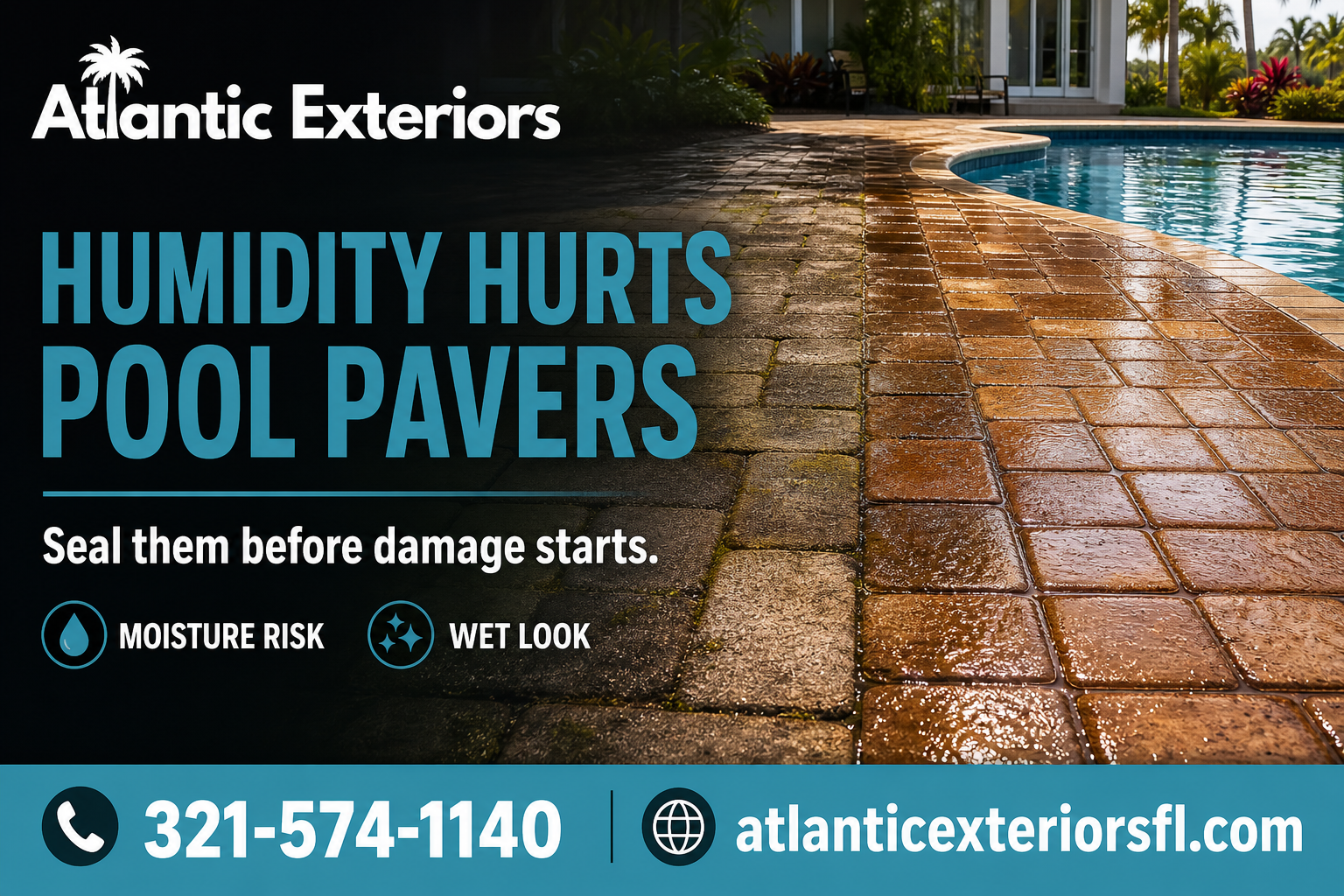
Brevard County pool areas take a beating. Between heat, salt air, afternoon storms, and steady moisture around the water, pavers near your pool stay under more stress than most driveways or patios.
If those pavers are unsealed, that humidity can start to show up in ways homeowners notice fast. Color fades. Sand joints loosen. Surface stains settle in easier. And the whole area can start looking older before it should.
For homeowners across Melbourne, Palm Bay, Viera, Rockledge, Merritt Island, Satellite Beach, Indialantic, Indian Harbour Beach, Melbourne Beach, Cocoa Beach, Cocoa, Cape Canaveral, Titusville, and West Melbourne, this is a common issue. It also matters for HOAs, restaurants, and property managers with poolside pavers or courtyard areas near water features.
At Atlantic Exteriors, Derek Perreira handles paver sealing and restoration for small residential pool decks and larger commercial spaces across the Space Coast. If you want a clear opinion on what your pavers need, call Derek directly at (321) 574-1140.
Why pool areas stay harder on pavers
Humidity alone is not the whole problem. It is the constant mix of moisture, sun, and traffic that creates trouble.
Around a pool, pavers often deal with:
- damp air for long stretches
- splash-out from the pool
- wet feet and furniture moving across the surface
- summer UV exposure
- afternoon thunderstorms
- pollen and organic debris settling into the surface
- salt air in beachside areas like Satellite Beach, Indialantic, Indian Harbour Beach, Melbourne Beach, and Cocoa Beach
Unsealed pavers are more open to all of that. They can absorb moisture more easily, and that makes them more vulnerable to gradual wear.
What homeowners usually notice first
Most people do not spot the problem in one day. They notice a slow change.
It often starts with:
- pavers looking dull or washed out
- darker damp spots that seem to linger
- joint sand thinning out
- mildew or algae showing up more often in shaded sections
- stains from leaves, planters, food, or poolside use becoming harder to ignore
That does not always mean the pavers are ruined. But it usually means they are less protected than they should be.
What humidity does to unsealed pool deck pavers
Pavers around your pool do not have to sit underwater to be affected by moisture. In Brevard County, the air itself carries a lot of water for much of the year.
When pavers are unsealed, humidity can contribute to several problems.
Moisture gets into the surface more easily
Pavers are not solid like a sheet of tile. They have a porous surface, which means they can take in some moisture. Around a pool, that repeated dampness can make the surface stay wet longer after rain, splashing, or cleaning.
Longer wet time can encourage discoloration and organic growth, especially in shaded areas or spots with poor airflow.
Joint sand can break down faster
The sand between pavers helps keep the system stable. In humid, wet pool areas, unsealed joints can lose sand faster from splash-out, runoff, and regular use.
When that happens, you may start seeing:
- wider-looking joints
- slight paver movement
- weed growth in joints
- ants or other insects working into the gaps
That is one reason paver sealing matters. It helps protect both the surface and the joint area.
Stains can set in more easily
Pool areas collect more than water. Sunscreen, drinks, food, leaves, mulch, and planters can all leave marks. On unsealed pavers, those stains often grab faster and clean up less easily.
No one should promise every stain comes out. That is not honest. But sealed pavers are generally easier to maintain than unsealed ones.
Color fades sooner
Humidity does not fade color by itself. The bigger issue is the full Florida mix: moisture, UV, rain, and use. Around pools, that cycle is constant.
Over time, unsealed pavers can lose richness and start looking chalky or tired. That is especially common on older pool deck pavers that have gone years without proper care.
Why this matters for homes and commercial properties
For homeowners, the biggest concern is usually appearance and upkeep. You want the pool area to feel clean, safe, and well kept. If the pavers always look dingy or worn, it affects the whole backyard.
For commercial properties, the issue is also about presentation. HOAs, apartment communities, restaurants, hotels, and property managers often have pool decks, entry courtyards, or water-adjacent walkways that stay humid much of the year.
In those spaces, worn pavers can make the property feel older and less maintained. Atlantic Exteriors handles both residential and commercial paver sealing, from smaller backyard pool areas to larger HOA walkways and business properties up to about 20,000 square feet.
If you manage a property and want Derek to take a look, call (321) 574-1140. He personally inspects every project.
How paver sealing helps around your pool
Paver sealing is not magic, and it is not forever. But it is one of the best ways to help pool deck pavers hold up better in our climate.
A properly maintained sealed surface can help by:
- reducing how easily moisture enters the paver surface
- helping color look richer and more even
- making routine cleanup easier
- helping stabilize joint sand
- slowing down the worn, dry look many unsealed pool areas get
For most paver sealing jobs, a realistic life span is about 2 to 3 years. Around pools, it is often closer to 2 years because of the extra moisture and use. Covered patios can sometimes go longer.
Derek can walk you through what makes sense for your specific pool area during a free on-site inspection.
Signs it may be time for an inspection
You do not need to guess. A few signs usually tell the story:
- your pool deck pavers dry unevenly
- the color looks faded compared to less exposed areas
- sand is missing from the joints
- stains are becoming more noticeable
- algae or mildew keeps returning
- the surface just looks older than the rest of the yard
Atlantic Exteriors provides a free on-site inspection, a written quote, and a post-project follow-up. The company is licensed and insured, and Derek handles jobs of all sizes across the Space Coast.
What to do if your pool pavers are already showing wear
If your pavers are unsealed and showing the effects of humidity, that does not always mean replacement. In many cases, paver repair and restoration plus paver sealing can improve both the look and the function of the area.
That may include:
- cleaning and prep work
- re-sanding joints where needed
- addressing minor paver movement or problem spots
- sealing pavers near your pool for better protection going forward
The right approach depends on the age of the pavers, their condition, drainage, shade, and how much use the area gets. That is why a local inspection matters more than generic advice online.
If you are in Melbourne, Palm Bay, Viera, Rockledge, Merritt Island, Titusville, or anywhere else in Brevard County, call Derek directly at (321) 574-1140. He can tell you what he sees and what is worth doing.
FAQ
Does humidity alone damage pavers around a pool?
Usually it is not humidity alone. It is the combination of humid air, splashing water, sun, storms, and daily use that wears on unsealed pavers faster.
How often should pool deck pavers be sealed?
In most cases, pool deck pavers are closer to a 2-year maintenance cycle. Some areas vary based on sun, shade, traffic, and exposure. Derek can walk you through this on the free inspection.
Can paver sealing help with fading and stains?
Paver sealing can help protect color and make cleanup easier. It does not mean every stain disappears or that pavers stay perfect, but it can make a big difference in how the area holds up.
Does Atlantic Exteriors handle larger commercial paver jobs too?
Yes. Atlantic Exteriors works on small residential spaces and larger commercial paver sealing projects, including HOA walkways, storefront areas, business entrances, and larger properties.
If your poolside pavers or other outdoor pavers in Brevard County are looking worn from humidity and moisture, Atlantic Exteriors can give you a clear, honest opinion. Visit https://www.atlanticexteriorsfl.com to learn more, then call Derek directly at (321) 574-1140 for your free on-site inspection and written quote.