Safe cleaners for sealed pavers in Brevard County
Brevard County homeowners and business owners deal with a lot on their pavers. Sun, salt air, pollen, humidity, afternoon storms, and day-to-day traffic all add up fast across the Space Coast. If you have sealed pavers in Melbourne, Palm Bay, Viera, Rockledge, Merritt Island, Satellite Beach, Indialantic, Indian Harbour Beach, Melbourne Beach, Cocoa Beach, Cocoa, Cape Canaveral, Titusville, or West Melbourne, the cleaner you use matters.
The short answer is simple. Mild cleaners are usually the safest choice on sealed pavers. Harsh chemicals, strong acids, and overly aggressive scrubbing can dull the finish, weaken the sealer sooner, or leave the surface looking uneven.
If you are not sure what was used on your pavers, call Derek directly at (321) 574-1140. Atlantic Exteriors handles Paver Sealing and restoration for both homes and commercial properties across Brevard County, and Derek personally inspects every project.
The safest type of cleaner for sealed pavers
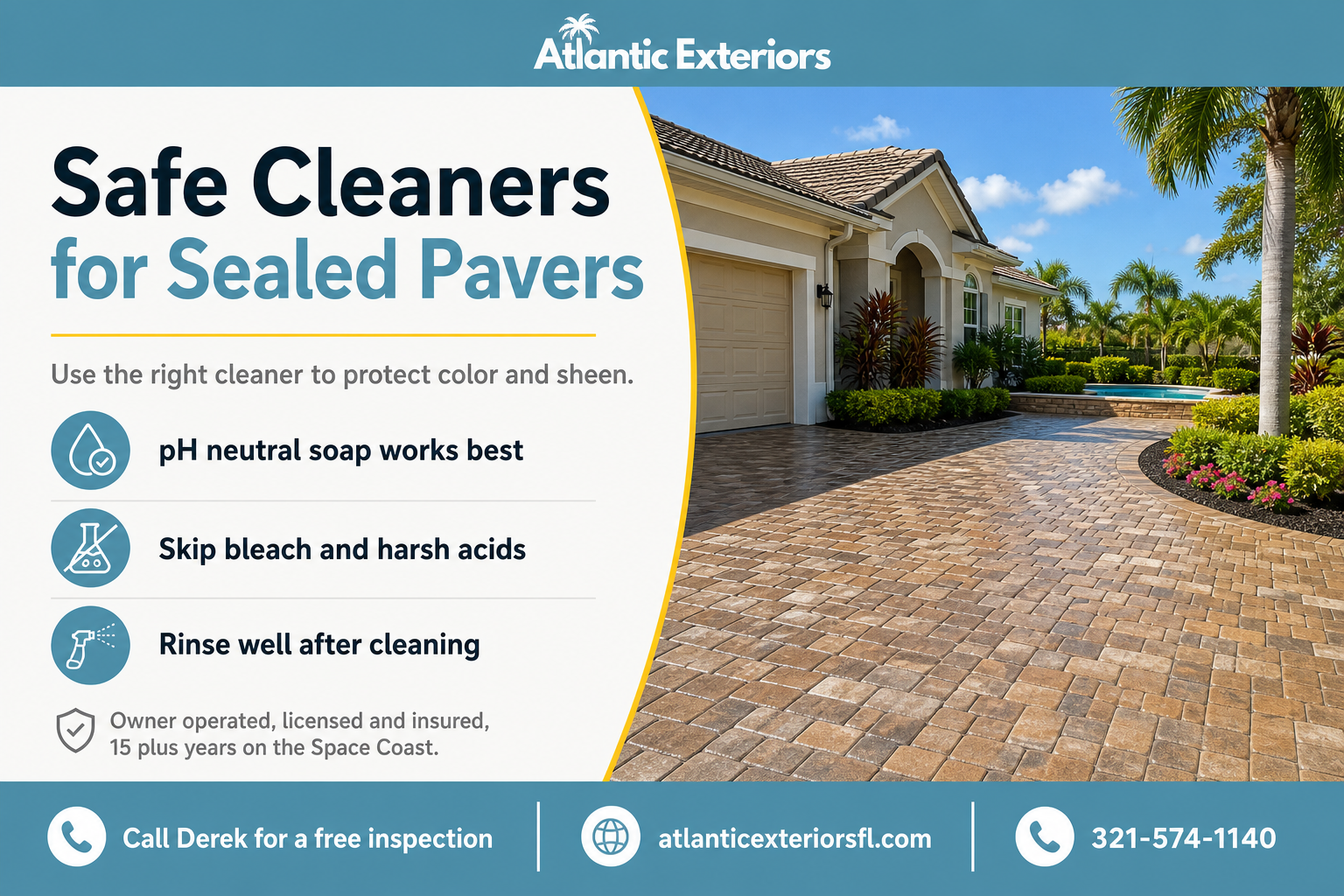
For routine cleaning, the safest option is usually a mild pH-neutral cleaner mixed with water. In plain terms, that means a gentle cleaner that is not strongly acidic or strongly alkaline.
Good general choices often include:
- Warm water with a small amount of mild dish soap
- A paver-safe neutral cleaner labeled for sealed surfaces
- Light spot cleaning with diluted soap and a soft brush
- A gentle rinse after cleaning to remove residue
This approach works well for many common issues, such as:
- Light dirt
- Pollen film
- Small food spills
- Mild grime from foot traffic
- Everyday buildup on patios, walkways, and pool deck pavers
The goal is to clean the surface without stripping away the protection from the sealer. That is especially important in Florida, where UV, rain, and humidity already put wear on outdoor surfaces.
For many homeowners, less is more. A simple cleaner used the right way is often better than a strong product that creates a new problem.
Cleaners and methods to avoid on sealed pavers
Some products can be too harsh for sealed pavers, even if they seem effective at first. They may fade the finish, leave blotchy areas, or shorten the life of the sealer.
Usually best to avoid
- Acid-based cleaners
- Bleach used too strong or too often
- Degreasers that are not labeled safe for sealed pavers
- Rust removers unless a pro confirms they are safe
- Solvent-heavy products
- Abrasive powders
- Wire brushes or very stiff bristles
A lot of damage happens when someone tries to scrub out one stain with the strongest product they can find. That can leave one bright or dull patch that stands out from the rest of the driveway or patio.
Pressure can also be a problem. Atlantic Exteriors does not market general pressure washing as a service, but it is worth saying that overly aggressive washing can wear on the sealer and joint sand. If you are thinking about using strong pressure on sealed pavers, it is smart to call Derek at (321) 574-1140 first and talk it through.
Around pools, use extra care
Sealing pavers near your pool takes a little more caution. Pool chemicals, sunscreen, drink spills, and wet foot traffic all hit that area hard. Pool deck pavers also tend to need resealing a bit sooner, often closer to 2 years, because they take more abuse.
Stick with mild cleaning products around the pool. If something stronger seems necessary, Derek can walk you through it on a free inspection.
How to clean sealed pavers without causing damage
A safe cleaning process matters just as much as the cleaner itself.
A simple cleaning routine
- Sweep off loose dirt and leaves.
- Rinse the area lightly.
- Apply a mild cleaner mixed as directed.
- Use a soft-bristle brush or mop.
- Rinse well so cleaner does not dry on the surface.
- Let the pavers dry and check the finish.
Try one small test area first, especially if the pavers have a glossy or enhanced-color look. Some sealed pavers have more shine, while others have a more natural finish. Testing helps you avoid surprises.
Also, clean spills sooner rather than later. Oil, rust, leaf stains, and fertilizer marks can become harder to deal with if they sit too long in the Florida heat.
What homeowners and commercial properties should keep in mind
For homeowners, the most common sealed areas are driveways, patios, walkways, and paver sealing around your pool. These surfaces usually do best with gentle routine care and occasional professional help when stains or wear start to show.
For commercial paver sealing, the same rule applies, but traffic is heavier. Storefront and business-entrance pavers, HOA walkways, restaurant patios, and parking lot paver sealing areas often collect more gum, grease, drinks, and dirt. Property managers and business owners may be tempted to use stronger cleaners for speed, but that can create uneven wear across large sections.
That is why a consistent maintenance plan matters. Atlantic Exteriors works on small residential areas around 500 square feet and larger commercial jobs up to about 20,000 square feet. Whether it is a home in Merritt Island or a storefront entrance in Titusville, Derek personally inspects every project and gives a written quote.
Signs your sealer may already be wearing down
Sometimes the cleaner is not the main issue. The pavers may simply be due for service.
Watch for signs like:
- Fading color
- A dull or chalky look
- More staining than usual
- Water soaking in quickly instead of beading up
- Sand loss in the joints
- Uneven finish in high-traffic areas
Paver Sealing typically lasts around 2 to 3 years in our area. Pool deck pavers are often closer to 2 years. Covered patios can sometimes go beyond 3 years. Weather exposure, traffic, and past maintenance all play a role.
If your pavers are showing these signs, stronger cleaner is usually not the answer. A fresh professional evaluation is. Atlantic Exteriors is licensed and insured, and every project includes a free on-site inspection, a written quote, and a post-project follow-up.
When it is best to call a pro
If you are dealing with oil spots, rust marks, white haze, slippery buildup, or patchy sealer, it is a good time to get advice before trying random products. The wrong cleaner can turn a manageable issue into a bigger restoration job.
Derek has more than 15 years of paver experience and works directly with homeowners, HOAs, property managers, restaurants, and other businesses across the Space Coast. If you want a clear answer about what is safe for your sealed pavers, call Derek directly at (321) 574-1140.
Atlantic Exteriors serves Brevard County with owner-operated Paver Sealing and restoration for driveways, patios, walkways, pool area pavers, storefront entrances, and larger commercial spaces. You can also learn more at https://www.atlanticexteriorsfl.com, but the easiest next step is to pick up the phone and call Derek at (321) 574-1140 for a free inspection.
FAQ
Can I use bleach on sealed pavers?
Usually, it is best to be careful with bleach. Strong mixes or repeated use can affect the sealer and finish. A mild cleaner is the safer starting point.
Is Dawn dish soap safe on sealed pavers?
A small amount of mild dish soap mixed with water is often a reasonable option for light cleaning. Use it gently, rinse well, and test a small area first.
What is the best cleaner for sealed paver driveways?
For normal dirt and grime, a pH-neutral cleaner or mild soap and water is usually the safest choice. For oil, rust, or stubborn stains, call Derek before using a stronger product.
How do I know if my pavers need resealing instead of cleaning?
If color is fading, water no longer beads up, or stains are getting harder to remove, the sealer may be wearing down. Call Derek at (321) 574-1140 and he can inspect the surface and walk you through the next step.