How salt water and chlorine wear down poolside pavers
Pool deck pavers take a beating in Florida. Between salt water, chlorine, summer UV, humidity, afternoon thunderstorms, and plain old foot traffic, the area around your pool sees more wear than most parts of your home.
If you live in Brevard County, this is even more noticeable. Homes in Melbourne, Palm Bay, Viera, Rockledge, Merritt Island, Satellite Beach, and beachside areas like Indialantic, Indian Harbour Beach, Melbourne Beach, Cocoa Beach, and Cape Canaveral deal with a mix of pool chemicals, salt air, and heat almost year-round.
That does not mean your pavers are doomed. It does mean they need attention at the right time. Good Paver Sealing and proper maintenance can help slow down wear, protect the surface, and keep your pool area looking clean and cared for.
If you want a straight answer about your pool deck pavers, call Derek directly at (321) 574-1140. Atlantic Exteriors provides free on-site inspections, written quotes, and a post-project follow-up.
Why poolside pavers wear faster than other areas
Pavers near your pool live in a harsher environment than a driveway or covered patio. They deal with water almost every day, and that water is rarely just plain rain.
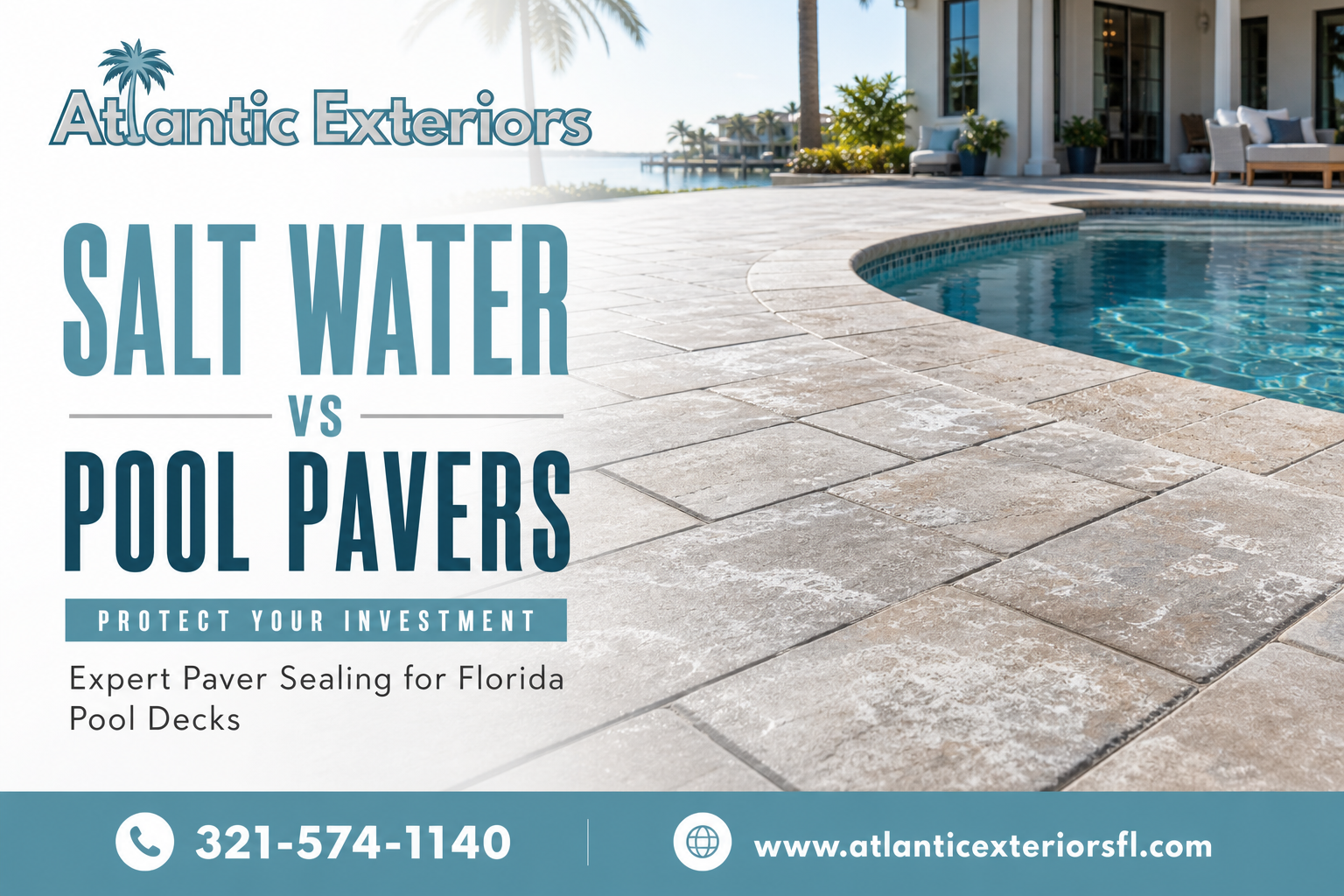
Salt water pools may feel gentler on skin, but the splash-out and residue can still be rough on paver surfaces over time. Chlorine pools have their own effect too. Add strong sun and high humidity, and the wear tends to show up sooner around the pool than in other areas.
What salt water does to pavers
Salt water usually does not destroy pavers overnight. The problem is repeated exposure.
When salt water splashes onto pavers and dries, it can leave residue behind. Over time, that residue can dull the surface, make the color look tired, and contribute to surface wear. In Brevard County, homes near the coast in places like Satellite Beach, Indian Harbour Beach, Melbourne Beach, and Cocoa Beach also deal with salt air on top of pool splash.
That double exposure matters.
What chlorine does to pavers
Chlorine can also wear on pool deck pavers over time. It may not always be dramatic at first. Often, homeowners notice the pavers start looking faded, dry, or uneven in color.
Chlorine exposure, especially when combined with sun and regular rinsing, can gradually weaken the fresh, clean look of the surface. If the pavers were sealed years ago, chlorine and weather can speed up the breakdown of that protection.
Florida weather makes the problem worse
Florida weather is hard on exterior surfaces. That is especially true in places like West Melbourne, Titusville, Cocoa, and Palm Bay where heat, rain, and humidity keep cycling through the year.
Pool deck pavers are often wet, then hot, then wet again. That constant change wears them down faster.
Sun and UV exposure
Summer UV is one of the biggest reasons poolside pavers fade. The areas around a pool are usually wide open, with little shade. That means the color can start looking washed out faster than pavers under a lanai or covered patio.
Afternoon thunderstorms and standing moisture
Brevard County storms hit hard. Heavy rain can push dirt, debris, and chemicals across the surface. If water sits in low spots, it can leave staining, encourage surface wear, and make problem areas stand out more.
Humidity, pollen, and hurricane season
Humidity keeps surfaces damp longer. Pollen sticks. During hurricane season, wind-driven rain and debris add another layer of stress. None of this helps an already exposed pool deck.
Signs your pool deck pavers are wearing down
Most homeowners notice the look before they notice the cause. The changes are usually gradual.
Here are some common signs:
- Color looks faded or uneven
- Pavers seem dry or chalky
- Surface no longer has the same rich finish
- More dirt seems to cling to the pavers
- Joint sand appears thin or missing in spots
- A few pavers feel loose or start shifting
- Water does not behave the same on the surface as it used to
If you are seeing these issues in Melbourne, Rockledge, Merritt Island, or Viera, it may be time for a closer look. Derek personally inspects every project, and he can tell you whether you need Paver Sealing, paver repair & restoration, or both. Call (321) 574-1140 to schedule a free inspection.
How Paver Sealing helps around your pool
Paver Sealing is not magic, and it is not forever. But it is one of the best ways to help protect pavers near your pool when it is done at the right time and on the right surface.
A properly sealed pool area can be easier to maintain and better protected from daily exposure to water, sun, and normal chemical contact. It can also help the pavers hold their color better and support the joint sand that helps keep the system stable.
For most Florida pool deck pavers, Paver Sealing typically lasts closer to 2 years. In less exposed areas, it may last 2 to 3 years, and covered patios can stretch beyond 3. The exact timing depends on sun, use, drainage, and how much salt water or chlorine reaches the surface.
When sealing alone is not enough
Sometimes the issue is not just surface wear. If pavers are shifting, sinking, or have lost too much joint sand, sealing should come after the needed repairs.
That is where paver repair & restoration comes in. Atlantic Exteriors handles both, so Derek can look at the whole picture instead of treating one symptom.
If you are not sure what your pool area needs, Derek can walk you through this on the free inspection.
What homeowners can do between professional visits
You do not need a complicated routine. Simple care goes a long way.
Smart habits for pool deck pavers
- Rinse splash-heavy areas from time to time
- Keep leaves and debris from sitting too long
- Watch for low spots where water collects
- Pay attention to fading and joint sand loss
- Avoid assuming every problem can be fixed with more water alone
The goal is not to overdo it. It is to catch wear early.
For homeowners in Indialantic, Melbourne Beach, Cape Canaveral, or Titusville, this matters even more because coastal conditions can speed things up. A quick phone call can save you from letting a small issue turn into a larger repair later. Call Derek directly at (321) 574-1140.
Why a local inspection matters in Brevard County
Pool pavers in Palm Bay do not always age the same way as pavers in Satellite Beach. Shade, salt air, drainage, storm exposure, and how often the pool is used all make a difference.
That is why an on-site inspection matters. Atlantic Exteriors is licensed and insured, and every project starts with a free on-site inspection and a written quote. Derek also includes a post-project follow-up, which homeowners appreciate because conditions can change quickly in Florida.
As an owner-operated company, Atlantic Exteriors keeps things simple. You are not guessing who will show up or who to talk to. Derek personally inspects every project and gives clear recommendations based on what your pavers actually need.
FAQ
Does salt water damage pool deck pavers?
Salt water can contribute to wear over time, especially with repeated splash-out and drying. In coastal Brevard County areas, salt air can add to that exposure.
Does chlorine ruin pavers around a pool?
Chlorine usually causes gradual wear rather than sudden damage. Homeowners often notice fading, a dry-looking surface, or a finish that does not look as strong as it used to.
How often should pool deck pavers be sealed in Florida?
Pool deck pavers in Florida are often closer to a 2-year cycle. Some pavers may last a bit longer, while covered areas can stretch beyond 3 years.
How do I know if I need sealing or repair?
If the issue is mostly fading and surface wear, Paver Sealing may be enough. If pavers are loose, uneven, or missing too much joint sand, repair may be needed first. Derek can explain the difference during a free inspection.
If your poolside pavers are looking worn, Atlantic Exteriors can help you understand what is going on and what makes sense next. For homeowners across Brevard County, from Melbourne and West Melbourne to Rockledge, Cocoa, and Merritt Island, Derek offers clear advice, a free on-site inspection, and a written quote. Visit https://www.atlanticexteriorsfl.com or, better yet, call Derek directly at (321) 574-1140 to talk through your pool pavers and schedule a visit.