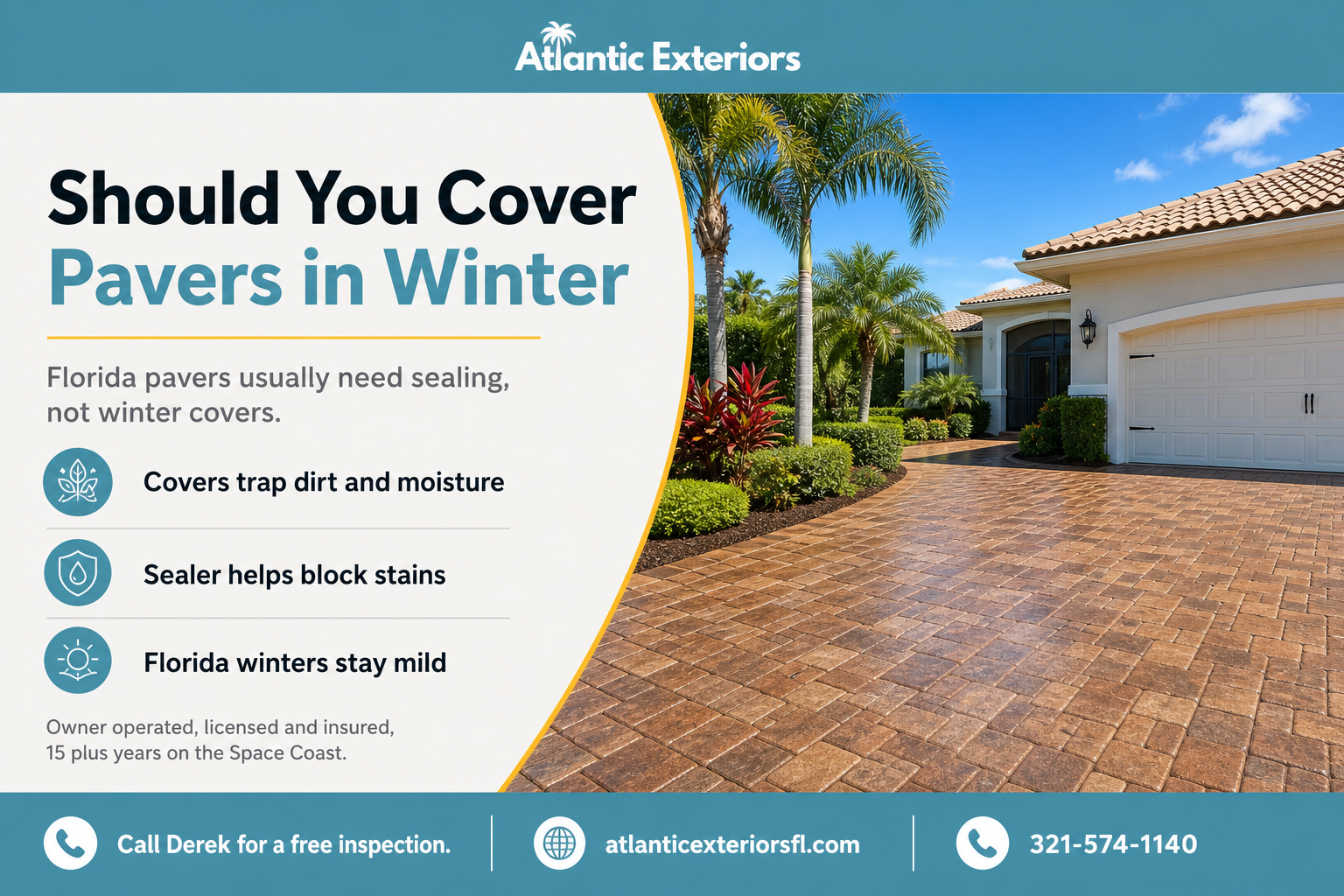
Should you cover pavers in winter? Honest Florida answer
Brevard County homeowners and property managers ask this every year: should I cover my pavers in winter?
The honest answer for the Space Coast is usually no.
In most of Melbourne, Palm Bay, Viera, Rockledge, Merritt Island, Satellite Beach, Indialantic, Indian Harbour Beach, Melbourne Beach, Cocoa Beach, Cocoa, Cape Canaveral, Titusville, and West Melbourne, winter is not harsh enough to make covering pavers a normal part of care. We do not deal with long freezes like northern states. What your pavers face here is different: sun, salt air, humidity, pollen, rain, and the wear of daily use.
That means the better question is not, “Should I cover them?” It is, “Are they clean, stable, and properly protected with paver sealing?”
At Atlantic Exteriors, Derek gives people the straight answer. If you want an honest look at your driveway, patio, pool deck pavers, or a commercial walkway, call Derek directly at (321) 574-1140.
Why most Florida pavers do not need winter covers
Covers make sense when a surface needs protection from heavy snow, ice, or repeated freeze-thaw cycles. That is not the normal winter story on the Space Coast.
Here in Brevard County, pavers are more likely to age from:
- UV from strong sun
- Moisture from rain and humidity
- Salt air near the beachside areas
- Algae and mildew in shaded spots
- Sand loss in joints over time
- Tire traffic on driveways and delivery areas
A cover usually does not solve those problems.
In some cases, a cover can even create new ones. If moisture gets trapped underneath, you can end up with dark patches, mildew, or uneven drying. That is especially true on pool deck pavers, shaded patios, and areas that already stay damp.
For most homes, the smarter move is routine inspection and timely paver sealing. Sealing helps your pavers resist staining, hold joint sand better, and keep a cleaner, more finished look. In Florida, that matters a lot more than winter covering.
When covering pavers might help a little
There are a few cases where a temporary cover can make sense.
During a short cold snap with delicate items on top
If you have outdoor furniture, planters, or décor that can stain a light-colored paver surface, a short-term cover may help keep debris or runoff off the area. But that is really about protecting from the items above, not winter weather itself.
During nearby messy work
If you are having painting, stucco, roof, or landscape work done near pavers, covering them for that project may help reduce splatter and mess. Even then, the cover should be used carefully and removed promptly so moisture does not sit underneath.
On a problem area Derek wants monitored
If a section holds water, has loose pavers, or has joint sand loss, Derek may suggest a temporary step until repair or restoration is done. That is not a blanket rule for all pavers. It is a case-by-case call.
If you are not sure what applies to your property, Derek can walk you through it on a free on-site inspection. Call (321) 574-1140 and talk to him directly.
What protects pavers better than a winter cover
For both homeowners and commercial clients, the real protection plan is simple.
1. Keep the surface in good shape
Loose, sunken, or shifting pavers should be addressed before they become a bigger problem. This matters on driveways, patios, pool areas, storefront entrances, HOA walkways, and parking lot paver sealing jobs alike.
A stable surface drains better and wears better.
2. Use paver sealing at the right time
Paver sealing is the main line of defense in our climate. It helps protect against everyday Florida wear and helps maintain color and joint stability.
Typical timing is:
- About 2 to 3 years for most pavers
- Closer to 2 years for pool deck pavers
- Sometimes beyond 3 years for covered patios
If your pavers look faded, dry, stained, or the joint sand is thinning out, it may be time for a fresh look from a pro.
3. Fix drainage and moisture issues
Standing water is a bigger enemy than winter air in Brevard County. If one part of a patio or driveway stays dark or slick, that area may need attention.
4. Get repairs done before sealing
Sealing over movement or damaged areas is not the right order. If pavers need repair and restoration first, that should be handled before paver sealing.
Atlantic Exteriors handles both small residential areas and large commercial spaces, from about 500 square feet to 20,000 square feet. So whether you have a backyard patio in Melbourne Beach or a business entrance in Viera, Derek can inspect it and give you a written quote.
Homeowners: what to do before and during winter
For most established homes, winter care is pretty basic.
Check your pavers for:
- Faded color
- Weed growth in joints
- Sand loss between pavers
- Dark damp spots
- Slick areas near the pool
- Small settling areas that could spread
If everything looks sound, you probably do not need to do anything special for winter. No tarp. No full cover. No complicated routine.
What you do want is a plan for upkeep. Paver sealing around your pool, on your driveway, or across your patio can help your hardscape handle Florida weather better year-round.
That is true whether you are in Palm Bay, Merritt Island, Satellite Beach, or Titusville.
Commercial properties: winter is still a good inspection season
For commercial paver sealing, winter can be a smart time to inspect conditions and plan work.
Property managers, HOAs, restaurants, and storefront owners usually are not worried about snow damage here. They are more often dealing with:
- Worn entry pavers
- Fading at business entrances
- Joint sand loss on walkways
- Trip hazards from movement
- Dirty-looking courtyards or common areas
A cover is rarely the answer. A good inspection is.
Derek personally inspects every project. That includes HOA and property-manager paver sealing, storefront and business-entrance pavers, and larger parking lot paver sealing areas. Atlantic Exteriors is licensed and insured, and every project includes a free on-site inspection, a written quote, and a post-project follow-up.
If you manage a property on the Space Coast and want a clear answer without a lot of runaround, call Derek directly at (321) 574-1140.
The honest bottom line
Should you cover your pavers in winter in Florida?
Most of the time, no.
For Brevard County properties, winter covers are usually unnecessary and sometimes unhelpful. Your pavers are far more affected by sun, moisture, salt air, traffic, and normal aging than by winter cold.
If your goal is to protect the surface, improve the look, and help it hold up longer, paver sealing is usually the better investment than covering it for the season.
If you want a straight answer for your specific driveway, patio, pool deck pavers, HOA walkway, or storefront entrance, call Derek at Atlantic Exteriors at (321) 574-1140. You can also learn more at https://www.atlanticexteriorsfl.com. Derek will personally inspect the job, explain what he sees, and help you decide whether you need paver sealing, repair, restoration, or simply peace of mind.
FAQ
Do pavers crack in winter in Florida?
It is much less common here than in colder states. On the Space Coast, movement, drainage issues, and long-term wear are usually bigger concerns than winter freezing.
Is it better to seal pavers before winter?
If your pavers are due, yes, that can be a smart time. Paver sealing helps protect against moisture, staining, and joint sand loss. Derek can tell you if the timing is right on a free inspection.
Should I cover pavers around my pool in winter?
Usually no. Pool deck pavers often do better with proper cleaning, stable joints, and paver sealing rather than a cover that can trap moisture.
How do I know if my pavers need sealing or repair?
Look for fading, loose pavers, thinning joint sand, stains, slick spots, or settling. If you are unsure, call Derek directly at (321) 574-1140 for a free on-site inspection.