How to spot a bad paver sealing job before paying
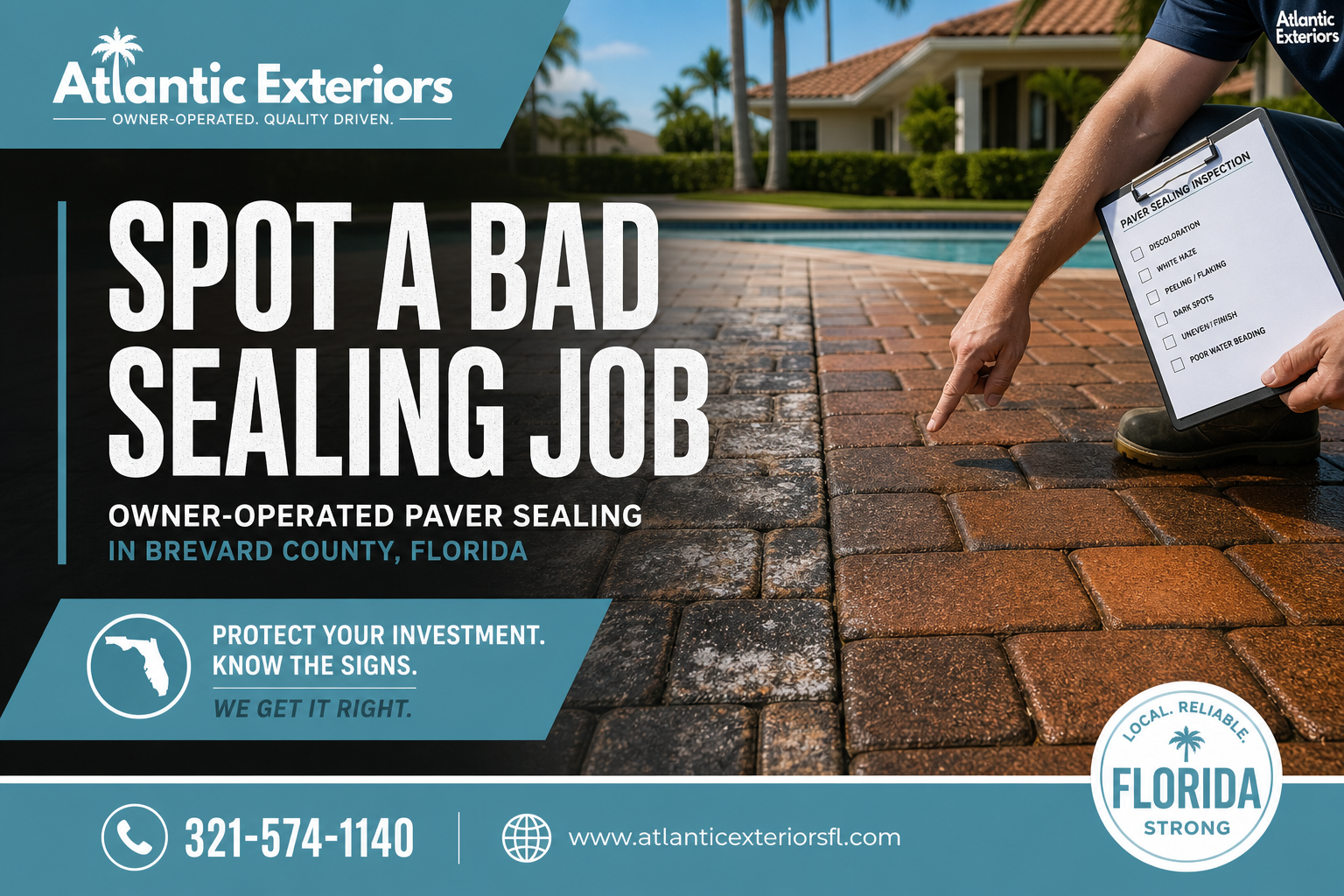
Bad paver sealing is usually easy to spot once you know what to look for. The hard part is knowing it before you hand over the final payment.
If you live in Brevard County, your pavers deal with a lot. Strong sun, salt air, humidity, pollen, afternoon thunderstorms, and hurricane season all wear on outdoor surfaces. A good paver sealing job should help protect and improve the look of your pavers. A bad one often shows warning signs right away.
At Atlantic Exteriors, Derek personally inspects every project. If you want a second opinion on paver sealing in Melbourne, Palm Bay, Viera, Rockledge, Merritt Island, or nearby, call Derek directly at (321) 574-1140.
Start with the overall appearance
When a paver sealing job is finished, the surface should look even and cared for. Not fake. Not blotchy. Not sticky.
A few things should catch your eye right away:
- The color should look more consistent, not patchy
- The finish should look even across the area
- The pavers should not look cloudy or milky
- There should not be heavy roller lines or puddled spots
- Sand joints should look filled and settled, not washed out
Some natural variation in pavers is normal. Brick pavers are not factory-perfect once they have been outside for years. But obvious unevenness after sealing is a red flag.
Watch for blotchy shine
One of the most common signs of a bad paver sealing job is uneven gloss. One section may look shiny while another looks dull. That can mean the sealer was applied unevenly, the surface was not cleaned properly, or moisture was trapped.
In Florida, trapped moisture matters. Humidity is high, and afternoon rain can show up fast. If the installer rushed the job or sealed too soon, the finish may not cure the way it should.
Check for haze, whitening, or a plastic look
Paver sealing should enhance the surface, not make it look painted over. If your pavers have a cloudy haze, white film, or thick plastic-like layer, something may be off.
This can happen when:
- Too much sealer was applied
- The pavers were still damp
- The weather conditions were poor during application
- The wrong product or method was used for the surface
This is especially important around pool deck pavers in places like Satellite Beach, Indialantic, Indian Harbour Beach, Melbourne Beach, Cocoa Beach, and Cape Canaveral. Salt air, splash-out, and constant sun can expose a poor job quickly.
A properly sealed pool area should still have a natural paver look. It should not look like a thick coating sitting on top.
Look at the edges and transitions
Bad work often shows up first in the details. Check the edges near the garage, lanai, coping, grass line, drains, and steps.
You do not want to see:
- Sloppy overlap onto walls or trim
- Missed spots along borders
- Heavy buildup in corners
- Sealer splashed onto nearby surfaces
Careful prep and application matter. A clean edge usually tells you the contractor paid attention through the whole job.
Test how the surface feels underfoot
Looks matter, but feel matters too. Walk the area carefully once it is ready to be used.
The surface should not feel:
- Sticky
- Tacky days later
- Extra slick in the wrong areas
- Gummy in shaded spots
This matters even more around your pool. Sealing pavers near your pool should improve protection and appearance without creating obvious safety concerns. If a section feels strange compared to the rest, ask about it before paying.
For homeowners in Melbourne, West Melbourne, Palm Bay, and Titusville, this is one of the easiest checks to do yourself. If something feels off, trust that instinct and ask questions.
Check the joints
Joint sand is a big part of paver sealing and restoration. If the joints are low, uneven, or already washing out right after the job, that is not a good sign.
The joints should look neat and properly filled for the project. You should not see large gaps, loose piles of sand left behind, or empty joints that were skipped.
If you are not sure what is normal, Derek can walk you through this on the free inspection.
Ask a few simple questions before final payment
You do not need to speak contractor language. Keep it simple.
Ask:
- Was the surface fully dry before sealing?
- Were problem areas pointed out before the job started?
- What should I expect over the next few days as it cures?
- When can I walk on it, drive on it, or put furniture back?
- Is there a post-job follow-up if I notice a concern?
Clear answers matter. So does communication after the work is done.
Atlantic Exteriors includes a free on-site inspection, a written quote, and post-job follow-up. Derek is owner-operated, licensed, and insured, and he stays accessible if a homeowner has questions after the work is complete. That kind of communication matters in Brevard County, whether you are in Cocoa, Merritt Island, Rockledge, or Indian Harbour Beach.
Red flags you should not ignore
A few issues should make you pause before handing over the final payment.
Red flags after paver sealing
- Strong patchiness that was not there before
- White haze or milky spots after curing time
- Noticeable roller marks or puddled sealer
- Sand joints that look incomplete or disturbed
- Mess on nearby surfaces
- Poor communication when you ask basic questions
Not every small issue means the whole job failed. Sometimes a touch-up is reasonable. But if the contractor avoids the conversation or cannot explain what happened in plain terms, that is a problem.
Florida weather is not an excuse for sloppy work
Weather affects scheduling. That is real. Summer UV, humidity, pollen, and fast-moving storms in places like Cocoa Beach, Melbourne Beach, and Satellite Beach can all affect timing.
But weather should be planned around, not used as a blanket excuse for poor results. A careful contractor should explain what conditions are needed and why timing matters.
Why local experience helps
Paver sealing in Florida is not the same as paver sealing somewhere with mild weather and low humidity. Homes in Viera, Melbourne, Palm Bay, Cape Canaveral, and Titusville all deal with intense sun and moisture cycles.
That is why owner involvement matters. Derek has 15+ years of paver experience, and he personally inspects every project for Atlantic Exteriors. If something needs to be explained, you are not stuck trying to reach a call center. You can call Derek directly at (321) 574-1140.
That one conversation can save you from paying for a job that does not look right.
FAQ
How long should paver sealing last in Florida?
In most cases, paver sealing lasts about 2 to 3 years. Pavers around your pool are often closer to 2 years because of sun, water, and foot traffic. Covered patios can sometimes go beyond 3 years.
Is it normal for sealed pavers to look different right after the job?
Yes, some change is normal. Color usually looks richer, and the surface may have more of a finished look. But cloudy haze, sticky areas, and very uneven shine are not signs to ignore.
Should I pay in full if I see obvious problems?
If you see clear issues, ask for an explanation before final payment. A good contractor should be willing to walk the job with you and address reasonable concerns.
Who should I call for a second opinion on paver sealing?
If you are in Brevard County and want an honest look at the job, call Derek at Atlantic Exteriors at (321) 574-1140. Derek personally inspects every project and can walk you through what looks normal and what does not.
If you want straightforward advice about paver sealing, paver repair, or restoration, Atlantic Exteriors is here to help. Visit https://www.atlanticexteriorsfl.com for more information, then call Derek directly at (321) 574-1140 to schedule your free on-site inspection and written quote.