Unsealed pavers in Florida hurricane season: what to expect
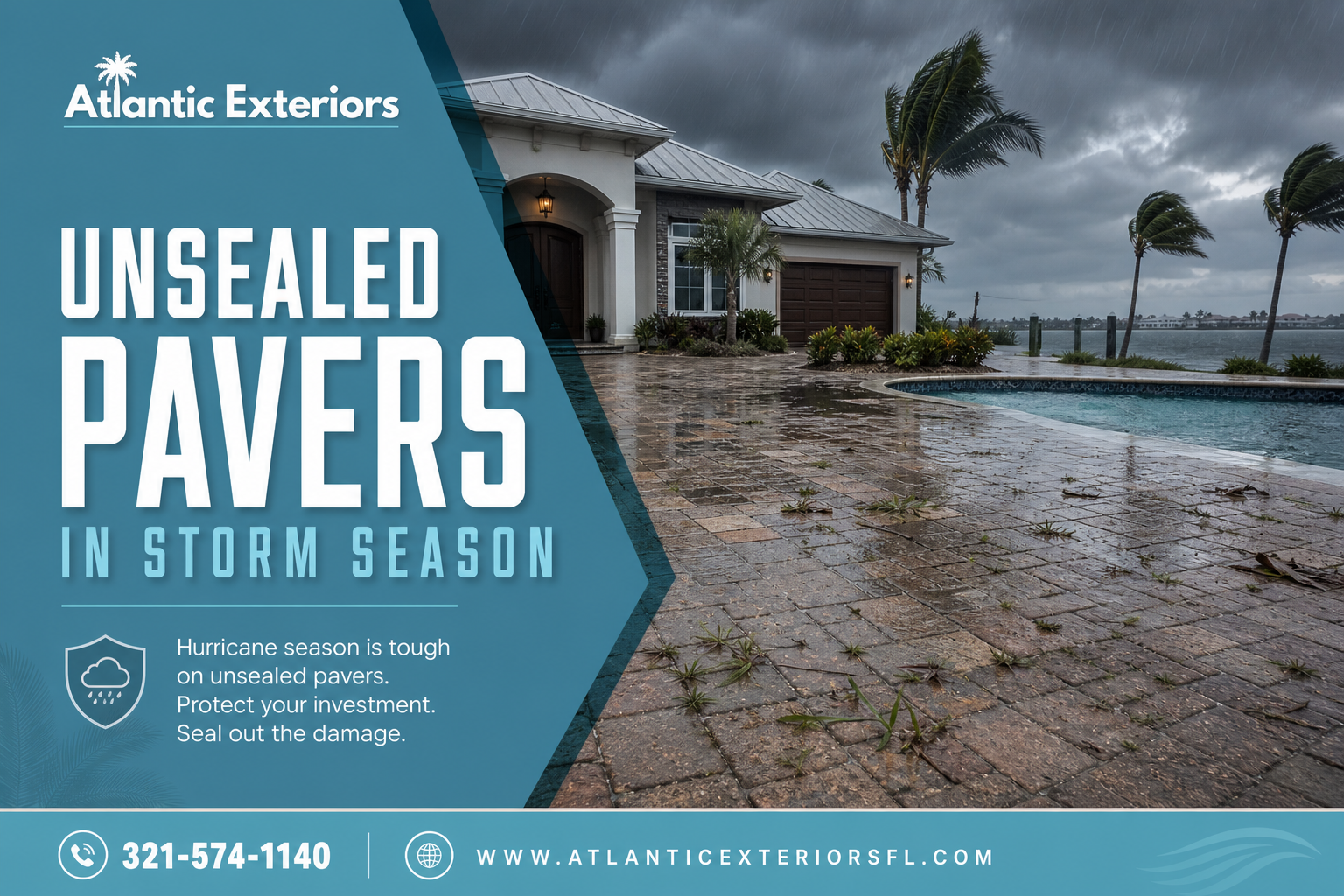
Florida hurricane season is rough on anything that lives outside. That includes brick pavers.
If your driveway, patio, walkway, or pool deck pavers are unsealed, months of heavy rain, wind, humidity, and strong sun can wear them down faster than many homeowners expect. The change is not always dramatic overnight. More often, it shows up as fading color, sand loss, weed growth, staining, and a surface that starts looking tired before its time.
For homeowners in Melbourne, Palm Bay, Viera, Rockledge, Merritt Island, and across Brevard County, this is where Paver Sealing makes a real difference. If you want Derek to take a look, call Atlantic Exteriors at (321) 574-1140. Derek personally inspects every project and provides a free on-site inspection with a written quote.
Why hurricane season is so hard on unsealed pavers
Florida does not just get rain. We get long stretches of wet weather, afternoon thunderstorms, high humidity, summer UV, and in many areas, salt air too. During hurricane season, those conditions stack up.
Unsealed pavers are more open to absorbing water and holding onto dirt, pollen, and organic debris. Over time, that can lead to a few common problems:
- Faster fading from sun and rain exposure
- More staining from leaves, mulch, and storm debris
- Joint sand washing out during heavy downpours
- More weed and moss growth between pavers
- A dull, dry-looking surface
- More movement in pavers if the joints weaken over time
This matters whether you live in Satellite Beach, Indialantic, Indian Harbour Beach, Melbourne Beach, or farther inland in West Melbourne, Cocoa, or Titusville. Coastal homes often deal with added salt air. Inland homes still get the same rain, heat, and humidity.
What you may notice after a few big storms
After a tropical storm or a rainy stretch, unsealed pavers often look older than they really are.
Color starts to look washed out
One of the first things homeowners notice is fading. Florida sun is already tough on pavers. Add repeated soaking rains and standing moisture, and the surface can lose that richer color even faster.
Sealed pavers do not stop aging forever, but Paver Sealing helps preserve the look much better than leaving them bare.
Joint sand begins to disappear
The sand between pavers helps them stay locked together. During hurricane season, strong rain can slowly wash that sand down and out, especially on driveways, sloped walks, and exposed patios.
When enough sand is lost, small gaps can open up. That makes it easier for weeds to grow and for pavers to shift over time. If you are seeing this around your home in Cape Canaveral, Cocoa Beach, or Merritt Island, Derek can walk you through what he sees on the free inspection.
Stains set in more easily
Storm season brings wet leaves, branches, dirt, and runoff. Unsealed pavers tend to absorb more of that mess. That can leave behind dark spots, rust-colored marks, or organic staining that is harder to clean up later.
This is especially common around pool deck pavers, lanais, and shaded patios where moisture lingers.
The hidden issue: moisture hangs around longer
A lot of homeowners focus on the look of the pavers first. That makes sense. But moisture is often the bigger issue.
When pavers stay damp for long periods, they become a better place for:
- Mildew and algae film
- Weed growth in the joints
- Ant activity in loosened sand
- Surface grime that sticks instead of rinsing away
That does not mean every unsealed patio will fail during one storm season. It means the wear tends to add up faster in Florida, especially when pavers are already a few years old.
Homes near the water in Satellite Beach, Indian Harbour Beach, Indialantic, Melbourne Beach, and Cocoa Beach often see this sooner because of the mix of humidity, salt air, and wind-driven rain.
Driveways, patios, and pool areas do not all age the same
Not every paver area takes the same beating.
Driveway pavers
Driveways usually deal with the most abuse. They take rain, sun, vehicle traffic, and runoff. If the joint sand is already low, hurricane season can speed up wear and make small issues more noticeable.
Patio and walkway pavers
Patios and walkways can hold moisture longer, especially in shaded areas. Pollen, wet leaves, and storm debris often settle here and leave stains behind.
Pavers around your pool
Pavers near your pool often need the most frequent attention. In Florida, Paver Sealing around your pool typically has a shorter life cycle than a covered patio because of constant sun, water exposure, and foot traffic. In many cases, pool deck pavers are closer to a 2-year maintenance cycle, while other pavers may last 2 to 3 years, and covered areas can sometimes stretch beyond 3.
If you are not sure where your pavers stand, call Derek directly at (321) 574-1140. He can tell you what he sees and whether you need sealing, repair, or restoration.
Can unsealed pavers be damaged by one hurricane?
Sometimes people expect one storm to ruin everything. Usually, that is not how it works.
Most often, the real problem is cumulative wear. One season of heavy weather can expose weak spots that were already forming:
- Sand was already thinning
- Color was already fading
- Minor settling had already started
- Surface protection was already gone
Then hurricane season pushes those issues further.
In some cases, stronger storms can also move debris across the surface, leave behind staining, or contribute to washout along edges and transitions. If pavers are loose, uneven, or sinking, that may point to a repair issue rather than sealing alone. Atlantic Exteriors also handles paver repair and restoration when needed.
When Paver Sealing makes sense in Brevard County
Paver Sealing is not about making a big promise. It is about practical protection and easier upkeep.
A properly maintained sealed surface is generally better able to:
- Hold color longer
- Resist everyday staining better
- Help stabilize joint sand
- Make routine cleaning easier
- Improve the overall appearance of older pavers
That is valuable in Brevard County, where homes in Melbourne, Palm Bay, Viera, Rockledge, West Melbourne, Titusville, and surrounding areas all deal with some version of the same Florida weather pattern.
Atlantic Exteriors is owner-operated, licensed, and insured. Every project includes a free on-site inspection, a written quote, and a post-project follow-up. Derek personally inspects every job, so you are not getting a vague answer from someone who has not seen your pavers.
What to do if your pavers are already looking worn
If your pavers look faded, dry, sandy, or harder to keep clean after a rainy season, the best first step is a real inspection.
Not every surface needs the same solution. Some pavers need sealing. Some need joint sand addressed first. Some need repair and restoration before sealing makes sense. Derek can walk you through this on the free inspection.
If you are in Melbourne, Palm Bay, Viera, Rockledge, Merritt Island, Satellite Beach, Indialantic, Indian Harbour Beach, Melbourne Beach, Cocoa Beach, Cocoa, Cape Canaveral, Titusville, or West Melbourne, call Derek directly at (321) 574-1140.
FAQ
How can I tell if my pavers are unsealed or the old sealer has worn off?
A common sign is faded color and a dry, chalky look. You may also notice that water darkens the pavers quickly instead of beading up, or that sand is washing out more easily. Derek can confirm this during a free inspection.
Does Paver Sealing stop all hurricane-season damage?
No. Nothing outside is immune to Florida weather. But Paver Sealing can help protect the surface, hold color better, and reduce some of the wear that unsealed pavers tend to show faster.
How often should pavers be sealed in Florida?
A typical range is about 2 to 3 years. Pavers around your pool are often closer to 2 years, while covered patios can sometimes last beyond 3. The exact timing depends on sun, rain, traffic, and condition.
Who should I call for paver sealing in Brevard County?
Call Derek at Atlantic Exteriors at (321) 574-1140. He personally inspects every project, provides a free on-site inspection and written quote, and can explain whether your pavers need sealing, repair, or restoration.
If your pavers have taken a beating from Florida rain, humidity, salt air, and summer sun, Atlantic Exteriors is here to help. Visit https://www.atlanticexteriorsfl.com to learn more, then call Derek directly at (321) 574-1140 for a free inspection and honest advice about your pavers.