Why DIY paver sealing fails in Florida humidity
Brevard County homeowners know the pattern. A driveway in Melbourne looks dry by noon, clouds build by mid-afternoon, and the air still feels heavy even when the sun is out.
That is a big reason DIY paver sealing often goes wrong on the Space Coast.
Paver sealing is not just about rolling on a product and hoping for a nice shine. In places like Palm Bay, Viera, Rockledge, Merritt Island, Satellite Beach, Indialantic, Indian Harbour Beach, Melbourne Beach, Cocoa Beach, Cocoa, Cape Canaveral, Titusville, and West Melbourne, the weather works against rushed jobs. Humidity, salt air, pollen, summer UV, and afternoon thunderstorms all matter.
At Atlantic Exteriors, Derek Perreira sees the same issues over and over. A homeowner tries to save money, spends a weekend on it, and ends up with a cloudy finish, trapped moisture, uneven color, or sand that does not hold. The same thing can happen at storefronts, HOA walkways, restaurants, and business entrances when maintenance crews or general staff try to handle commercial paver sealing in-house.
If you want a straight answer about your own pavers, call Derek directly at (321) 574-1140. He personally inspects every project.
Florida humidity changes everything
In drier climates, a DIY sealing job has more room for error. On the Space Coast, not so much.
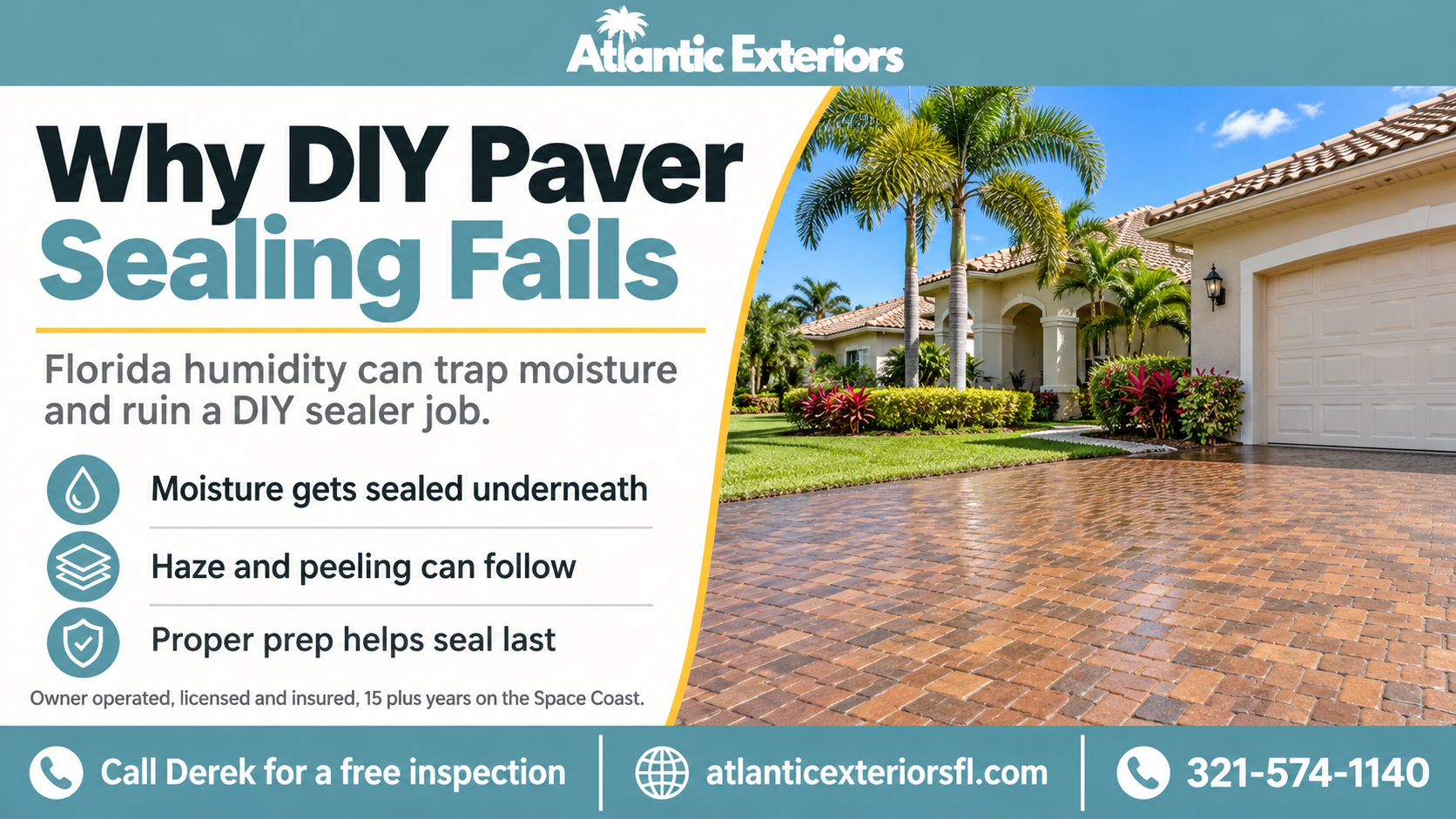
Humidity slows drying. It can leave moisture in the pavers, in the joints, and in the air right above the surface. That matters because sealer needs the right conditions to bond well and cure the way it should.
When that does not happen, you can run into problems like:
- A hazy or milky look
- Sticky spots that stay tacky too long
- Blotchy finish or uneven shine
- Joint sand that fails early
- Sealer that wears off sooner than expected
This is especially common around pool deck pavers, shaded patios, and low spots that hold dampness. It also shows up on commercial properties where large paver areas may dry unevenly from one section to the next.
“It looked dry” is not the same as “it was ready”
This is one of the biggest DIY mistakes.
A paver surface can look dry on top while still holding moisture below. After rain, irrigation, morning dew, or even a humid night, that hidden moisture can interfere with paver sealing. Florida makes this worse because the air itself stays damp.
That is why timing matters so much. Derek can walk you through this on the free inspection, but in general, paver sealing in Brevard County needs the right weather window, not just a sunny afternoon.
Prep work is where most DIY jobs break down
Most failed sealing jobs do not fail because the homeowner did not work hard. They fail because prep work is harder than it seems.
Pavers need to be properly cleaned, fully dried, and correctly sanded before sealer goes down. If any step is rushed, the final result can suffer.
Common prep mistakes include:
- Sealing over dirt, pollen, or old residue
- Not allowing enough dry time after cleaning
- Leaving weeds or organic growth in joints
- Using too much or too little joint sand
- Applying sealer before the sand is settled and ready
On older driveways and patios, there may also be worn areas, shifted pavers, edge problems, or spots that need paver repair and restoration before sealing makes sense. Sealer is not a fix for underlying surface issues.
For homeowners, that often means a patio or driveway that still does not look right after all the work. For commercial clients, it can mean a business entrance or HOA walkway that looks uneven and needs to be redone sooner than planned.
Florida weather does not give you much margin for error
On the Space Coast, weather can change fast.
A morning that seems perfect in Merritt Island or Titusville can turn into a stormy afternoon. Even if rain holds off, high humidity can still affect how the sealer sets up. Add salt air near beachside areas like Satellite Beach, Indialantic, Indian Harbour Beach, Melbourne Beach, and Cocoa Beach, and the environment gets even tougher.
The wrong day can cost you twice
A DIY job often means buying materials, blocking off the area, moving cars, and giving up a weekend. If the weather turns or the finish goes bad, you may end up paying again to strip, repair, or redo the surface.
That is frustrating on a home driveway. It is even more frustrating for commercial paver sealing projects where access matters. A restaurant entry, storefront walkway, HOA common area, or parking lot paver sealing job needs better planning so foot traffic and vehicles are not disrupted longer than necessary.
Atlantic Exteriors handles both small and large projects, from residential patios around 500 square feet to larger commercial areas up to about 20,000 square feet. Derek personally inspects every project, provides a written quote, and follows up after the work is done.
If you want an honest opinion before you spend money on a DIY attempt, call Derek at (321) 574-1140.
Store-bought products and application mistakes add more risk
Not every sealer is a good fit for every paver surface. And even a decent product can perform poorly if it is applied the wrong way.
Too much sealer can leave a heavy, plastic-looking finish. Too little may not give the protection people expected. Uneven application can create lap marks or shiny patches next to dull ones.
Homeowners often run into trouble when they try to seal:
- Older brick paver driveways
- Pool deck pavers with moisture exposure
- Patios with shade and slow dry times
- Walkways with lots of joint movement
Commercial properties have their own challenges. Large open areas can heat up fast in the sun, while covered sections stay cooler and damper. That difference can affect the final look if the job is not managed carefully.
This is why owner-operated service matters. With Atlantic Exteriors, you are not getting a vague estimate from someone who will never be on-site. Derek is the one you talk to, and Derek is the one who inspects the job.
What to do instead of rolling the dice
If your pavers are faded, sandy, or hard to keep clean, the best next step is a real inspection.
A good paver sealing plan starts with the condition of the surface, not with a guess from a shelf label. Some pavers need sealing. Some need repairs first. Some just need the timing handled correctly.
Atlantic Exteriors offers:
- Free on-site inspections
- Written quotes
- Licensed and insured service
- Residential and commercial paver sealing
- Paver repair and restoration when needed
- Post-project follow-up
In Brevard County, paver sealing typically lasts about 2 to 3 years. Pavers around your pool are often closer to 2 years because of water, sun, and traffic. Covered patios can last longer than 3 years in some cases.
That is the kind of practical guidance most DIY videos leave out.
If you are in Melbourne, Palm Bay, Viera, Rockledge, Merritt Island, Titusville, Cocoa, Cape Canaveral, or beachside, call Derek directly at (321) 574-1140. He can tell you what makes sense for your pavers without the runaround.
FAQ
Why does paver sealing turn cloudy in Florida?
Cloudiness often comes from moisture getting trapped during or after application. In Florida, humidity, dew, and quick weather changes make that more likely.
How long does paver sealing last in Brevard County?
Most paver sealing lasts around 2 to 3 years. Pool deck pavers are often closer to 2 years, while covered patios may last longer.
Can I seal pavers myself if the forecast looks clear?
A clear forecast helps, but it is not the whole story. Humidity, surface moisture, shade, irrigation, and joint condition all matter too. Derek can walk you through this on the free inspection.
Does Atlantic Exteriors handle commercial paver sealing too?
Yes. Atlantic Exteriors works with homeowners and commercial clients, including HOAs, property managers, storefronts, restaurants, walkways, entrances, and larger paver areas. For a free on-site inspection and written quote, call Derek directly at (321) 574-1140 or visit https://www.atlanticexteriorsfl.com. If you want clear advice and owner-operated service, give him a call.