Why pavers look milky after sealing and how to avoid it
If you live in Brevard County or anywhere on the Space Coast, you have probably seen it before. A paver driveway, patio, or pool deck gets sealed, then a cloudy white or gray haze shows up instead of a clean, rich finish.
That milky look is frustrating. It can make good pavers look older, dirtier, and uneven. The good news is that it usually happens for a reason, and in many cases it can be avoided with the right prep, timing, and product choice.
At Atlantic Exteriors, Derek Perreira handles Paver Sealing for homeowners and commercial properties across Melbourne, Palm Bay, Viera, Rockledge, Merritt Island, Satellite Beach, Indialantic, Indian Harbour Beach, Melbourne Beach, Cocoa Beach, Cocoa, Cape Canaveral, Titusville, and West Melbourne. If your pavers look hazy now, or you want to avoid that problem on your next sealing job, call Derek directly at (321) 574-1140.
What causes pavers to look milky after sealing?
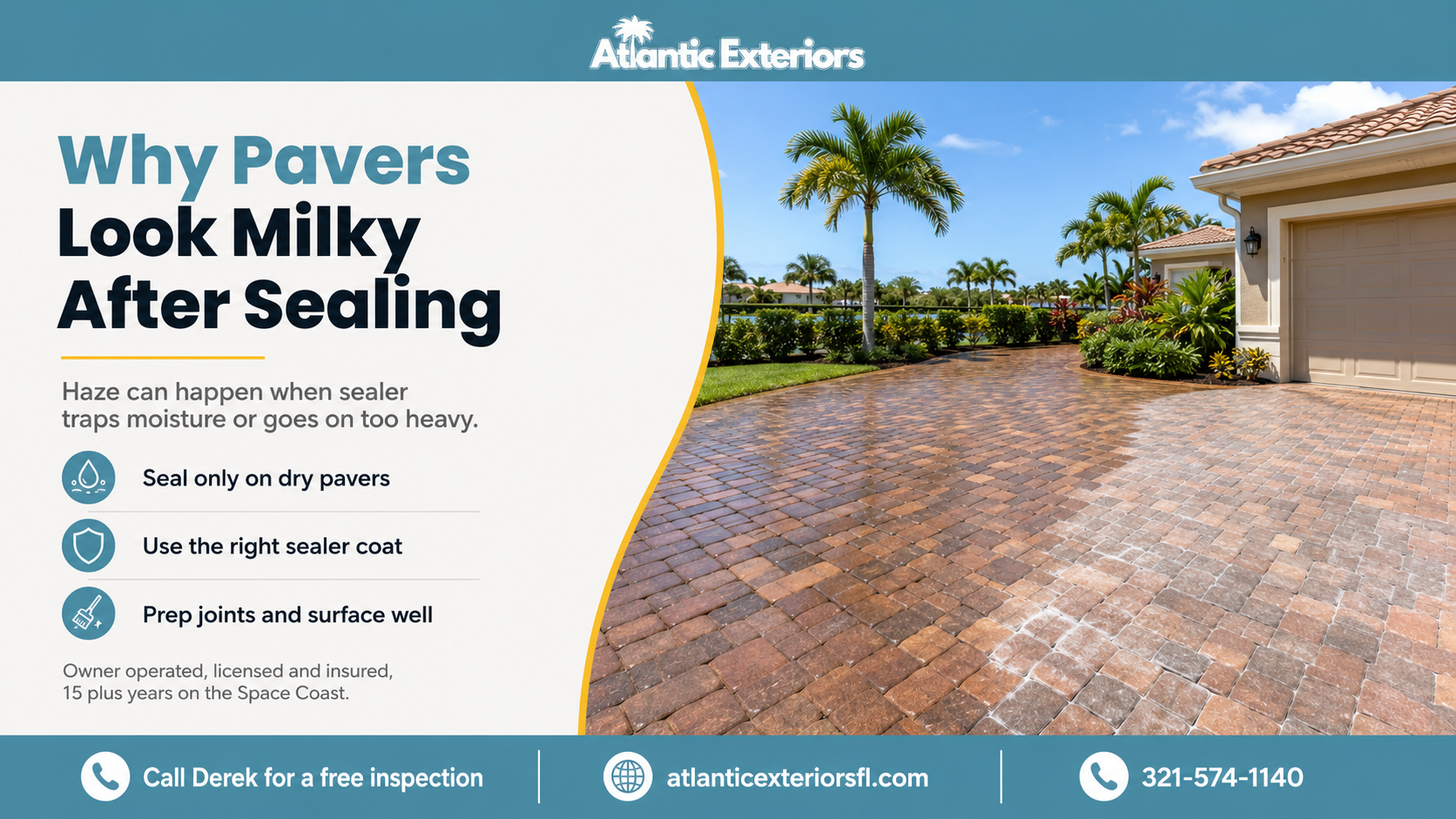
Most of the time, a milky or hazy finish comes down to trapped moisture, too much sealer, or poor weather timing.
Pavers are porous. They hold moisture below the surface, especially in Brevard County where humidity stays high and afternoon storms can roll in fast. If sealer goes down before the pavers are fully dry, that moisture can get trapped and show up as a cloudy film.
Other common causes include:
- Sealer applied too heavily
- A second coat put on too soon
- Sealing in very humid conditions
- Rain or sprinkler water hitting fresh sealer
- Old sealer layers not wearing evenly
- Pool deck pavers staying damp longer in shaded areas
This is one reason Paver Sealing is not just a quick spray-and-go job. Surface prep and timing matter just as much as the sealer itself.
Why Florida weather makes haze more common
On the Space Coast, pavers deal with:
- High humidity
- Salt air near the beachside
- Summer UV
- Pollen buildup
- Afternoon thunderstorms
- Long wet stretches during hurricane season
That mix can slow drying and create uneven conditions across the same project. A driveway in Viera may dry faster than pavers around a screened pool in Melbourne Beach. A storefront entry in Cocoa may look dry on top but still hold moisture below.
That is why Derek personally inspects every project before recommending Paver Sealing. If conditions are not right, he can explain what he is seeing during the free on-site inspection.
Signs the haze is from moisture vs too much sealer
Not every cloudy surface comes from the same issue. The pattern often gives clues.
Moisture-related haze
This often looks:
- Light gray or white
- Patchy or blotchy
- Worse in shaded spots
- More noticeable near joints or low areas
You may see this around pool deck pavers, covered lanais, or driveways that were cleaned and sealed before they had enough dry time.
Over-applied sealer
This often looks:
- Glossy in some areas and dull in others
- Streaky or smeared
- Sticky or tacky for too long
- Heavier in corners or edges
Too much product can sit on top instead of bonding evenly. That can create a cloudy film, especially once moisture and heat get involved.
If you are not sure which issue you have, call Derek at (321) 574-1140. He can look at the pavers in person and walk you through the likely cause.
How to avoid milky pavers in the first place
The best fix is prevention.
Good Paver Sealing starts before any sealer is opened. The pavers need to be cleaned correctly, allowed to dry fully, and sealed under the right weather conditions.
1. Make sure the pavers are truly dry
This is the big one.
Pavers can seem dry on the surface but still hold moisture below. After cleaning, rain, or sprinkler exposure, they may need more time than expected. This is especially true in shaded areas, near your pool, or during humid weeks in Palm Bay, Merritt Island, or Satellite Beach.
2. Do not rush the weather window
A clear morning does not always mean a safe sealing day. On the Space Coast, storm chances can build fast by afternoon. Humidity also matters.
A proper weather window helps the sealer cure more evenly and lowers the risk of haze.
3. Use the right amount of sealer
More is not better.
Heavy application can leave buildup on the surface. A balanced application helps protect the pavers while keeping the finish even and natural-looking.
4. Pay attention to problem areas
Some spots need extra care:
- Pool deck pavers
- Low spots that hold water
- Covered patios with limited airflow
- Beachside homes exposed to salt air
- Commercial walkways with shade and irrigation nearby
These areas may need a different approach or more dry time before Paver Sealing.
What homeowners and commercial properties should know
For homeowners, this issue often shows up on driveways, patios, walkways, and the pavers around a pool. If you have an established home in Melbourne, Rockledge, or Indialantic, you want the pavers to look clean and even, not cloudy a week later.
For commercial clients, haze can affect first impressions. Storefront and business-entrance pavers, HOA walkways, restaurant patios, and parking lot paver sealing projects all need careful timing and consistent application. Uneven results are more noticeable on larger surfaces.
Atlantic Exteriors handles small residential spaces around 500 square feet as well as large commercial paver sealing jobs up to about 20,000 square feet. Whether it is a backyard patio in West Melbourne or HOA and property-manager paver sealing in Titusville, Derek brings the same owner-operated attention to the job.
Can hazy pavers be fixed?
Sometimes yes, but the right fix depends on the cause.
In some cases, the haze may improve as trapped moisture works its way out. In other cases, the surface may need additional restoration steps. If there is sealer buildup, the solution is different than if the problem came from damp pavers or weather exposure.
The key is not guessing. A wrong fix can make the finish look worse.
That is why Atlantic Exteriors starts with a free on-site inspection, a written quote, and a post-project follow-up. Derek can assess whether the pavers need repair, restoration, or a new sealing plan. Atlantic Exteriors is licensed and insured, and Derek will explain the condition in plain language.
If your pavers already look cloudy, call Derek directly at (321) 574-1140. If you are planning new Paver Sealing and want to avoid the problem from the start, that same call can save you a lot of frustration.
FAQ
Why do my pavers look white after sealing?
The most common reasons are trapped moisture, sealer applied too heavily, or weather problems during curing. In Brevard County, humidity and sudden rain are frequent factors.
Will the milky haze go away on its own?
Sometimes a light moisture haze can improve, but not always. Derek can inspect the pavers and tell you whether it is likely to clear up or needs restoration work.
Are pool deck pavers more likely to turn hazy?
Yes, they can be. Pavers near your pool often stay damp longer because of splash-out, shade, and humidity. That makes dry time especially important before Paver Sealing.
How often should pavers be sealed?
Most Paver Sealing lasts about 2 to 3 years. Pavers around your pool are often closer to 2 years, while covered patios can sometimes go beyond 3 years depending on wear and exposure.
If you are in Melbourne, Palm Bay, Viera, Merritt Island, Cocoa Beach, Titusville, or anywhere in Brevard County, Atlantic Exteriors can help you avoid cloudy results and keep your pavers looking their best. For honest advice and a free inspection, visit https://www.atlanticexteriorsfl.com or call Derek directly at (321) 574-1140.