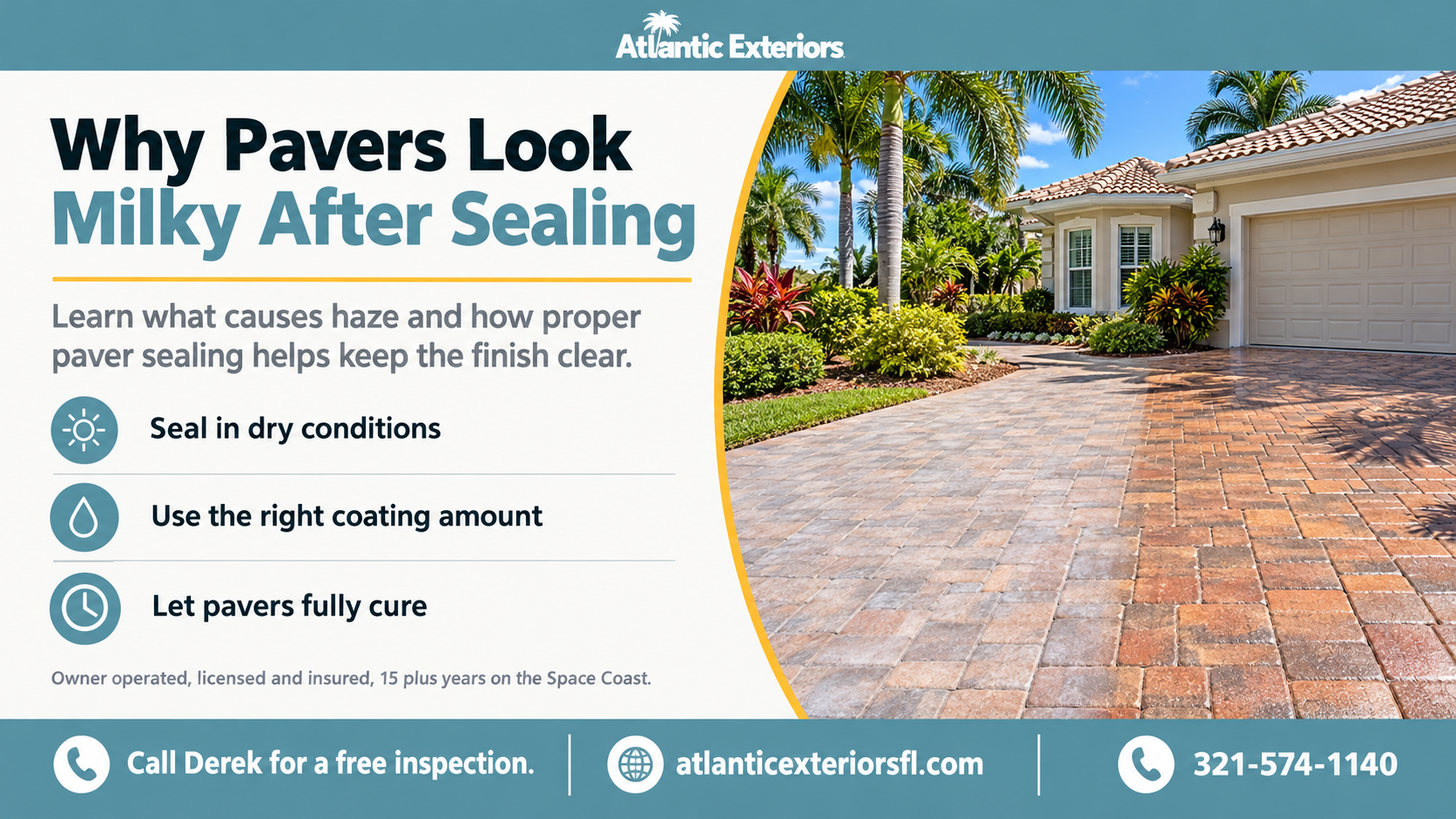
Why pavers look milky after sealing and how to avoid it
Brevard County homeowners and property managers see this problem more often than they should: pavers get sealed, then a white, milky, or hazy film shows up. It can happen on driveways in Melbourne, patios in Viera, pool deck pavers in Satellite Beach, or business entrances in Cocoa and Titusville.
The good news is this usually has a cause you can identify. The better news is that good prep, good timing, and the right paver sealing process can help prevent it.
At Atlantic Exteriors, Derek Perreira personally inspects every project. If your pavers look cloudy after sealing, or you want to avoid that problem before sealing a driveway, patio, pool area, HOA walkway, or storefront entrance, call Derek directly at (321) 574-1140.
What does a milky or hazy sealer look like?
Most people notice it as a light white cast over the pavers. Sometimes it looks patchy. Sometimes it shows up as dull spots, streaks, or a cloudy film that was not there before.
It may be easier to see:
- In bright sun
- After rain
- On darker pavers
- Around pool deck pavers
- In shaded or damp areas
On the Space Coast, this often stands out after afternoon thunderstorms, heavy humidity, or salt-air exposure near places like Indialantic, Indian Harbour Beach, Melbourne Beach, Cocoa Beach, and Cape Canaveral.
The most common reason: moisture got trapped
This is the big one.
If pavers or the sand joints still hold moisture when sealer goes down, that moisture can get trapped under the finish. The result can be a cloudy, hazy, or milky look.
Why this happens in Brevard County
Our local weather works against rushed jobs. Humidity stays high. Summer storms pop up fast. Morning dew can linger longer than people think. Areas near pools, sprinklers, shaded walls, and lanais may also stay damp.
Even if the surface looks dry, the pavers underneath may not be fully ready for paver sealing.
This is one reason Derek does a free on-site inspection before giving a written quote. He can look at drainage, shade, sprinkler patterns, past sealer buildup, and overall paver condition before the work starts.
Other causes of a white or cloudy look after paver sealing
Moisture is common, but it is not the only cause.
Too much sealer was applied
More is not always better. A heavy coat can dry unevenly and leave a cloudy appearance. Thick buildup can also make some areas look shinier than others.
The pavers were not cleaned or prepped well
Dirt, old residue, joint issues, or leftover contamination on the surface can interfere with how the sealer lays down. Paver sealing is only as good as the prep under it.
Old sealer buildup
Some pavers have been sealed more than once over the years. If older layers are failing, peeling, or turning cloudy, a new coat may not solve the root issue by itself.
Sealing at the wrong time
High humidity, incoming rain, cool overnight conditions, or strong midday heat can all affect results. On the Space Coast, timing matters more than many people realize.
Pool and waterfront conditions
Pavers around pools often deal with splash-out, frequent moisture, and chemical exposure. Near the coast, salt air adds another layer of wear. That is one reason pool deck pavers often need closer attention and usually have a shorter sealing cycle than a covered patio.
How to avoid milky pavers after sealing
The best fix is prevention.
Start with a real inspection
A quick glance is not enough. Derek personally inspects each job to check for:
- Drainage problems
- Damp areas
- Shade patterns
- Sprinkler overspray
- Previous sealer issues
- Loose or sunken pavers
- Joint sand condition
That matters whether it is a 500-square-foot patio in Rockledge or a larger commercial paver sealing project for an HOA, restaurant, storefront, or parking area up to 20,000 square feet.
Let the pavers fully dry
This sounds simple, but it is where many problems start. After cleaning or rain, pavers need enough dry time before sealing. The exact timing depends on site conditions, weather, shade, and the paver surface itself.
If you are not sure, Derek can walk you through this on the free inspection.
Use the right amount of sealer
Even coverage matters. Heavy application can create problems instead of protection. A proper paver sealing process aims for a clean, even finish, not a thick surface layer.
Watch the weather closely
In Florida, weather windows can be narrow. Humidity, afternoon storms, and overnight moisture all matter. A job that looks fine at noon can be at risk by evening if the weather shifts.
Address repairs before sealing
If pavers are loose, uneven, or holding water, sealing alone may not be the full answer. In some cases, paver repair and restoration should come first so the sealer has a better surface to work with.
What if your pavers are already hazy?
First, do not panic.
Some haze may improve as conditions change. Other cases need a closer look. The right next step depends on what caused it in the first place.
That is why a local inspection matters. A hazy driveway in Palm Bay may have a different cause than cloudy pool deck pavers in Merritt Island or a dull business entrance in West Melbourne.
Atlantic Exteriors does not guess from a photo alone. Derek personally inspects the pavers, explains what he sees in plain language, and gives you a written quote if repair, restoration, or resealing makes sense. To talk it through, call Derek directly at (321) 574-1140.
Why homeowners and commercial clients should care
For homeowners, cloudy pavers can take away from the look of your driveway, patio, walkway, or pool area. If you have an established home and want the outside to look cared for, haze after sealing is frustrating.
For commercial properties, appearance matters too. Milky pavers at a storefront entrance, restaurant patio, HOA walkway, or parking lot paver sealing project can make the property look poorly maintained.
That is why careful prep and timing matter on both residential and commercial paver sealing jobs. Atlantic Exteriors handles small home projects and larger commercial work across Brevard County, from Melbourne and Palm Bay to Viera, Cocoa, Cape Canaveral, and Titusville.
How long should paver sealing last?
In most cases, paver sealing lasts about 2 to 3 years. Pavers near your pool are often closer to 2 years because of sun, water, and regular use. Covered patios can sometimes stretch beyond 3 years.
That does not mean every surface ages the same way. Sun, salt air, foot traffic, vehicle traffic, sprinklers, and storm exposure all play a part.
If you are unsure whether your pavers need sealing, resealing, or repair first, call Derek at (321) 574-1140 for a free on-site inspection.
FAQ
Can milky pavers fix themselves over time?
Sometimes a light haze improves as trapped moisture works out, but not always. The cause matters. Derek can inspect it and tell you what looks likely.
Are pool deck pavers more likely to turn hazy after sealing?
They can be, because they deal with more moisture, splash-out, and humidity. That is why sealing pavers around your pool takes careful timing and prep.
Does this happen on commercial paver sealing jobs too?
Yes. Storefront and business-entrance pavers, HOA walkways, and parking lot paver sealing areas can all develop haze if moisture, buildup, or application issues are present.
What should I do before scheduling paver sealing?
Start with a free inspection. Atlantic Exteriors is licensed and insured, every project includes a written quote and post-project follow-up, and Derek personally inspects the job before work begins.
If your pavers already look cloudy, or you want paver sealing done the right way from the start, Atlantic Exteriors is here to help across Brevard County and the Space Coast. Visit https://www.atlanticexteriorsfl.com, then call Derek directly at (321) 574-1140 to schedule your free on-site inspection.