Why pavers near a saltwater pool need a different sealer
Across Brevard County and the Space Coast, saltwater pools are common in backyards from Melbourne and Palm Bay to Viera, Merritt Island, Satellite Beach, and Titusville. They are great for comfort and lower chlorine smell, but the pavers around them deal with a different kind of wear.
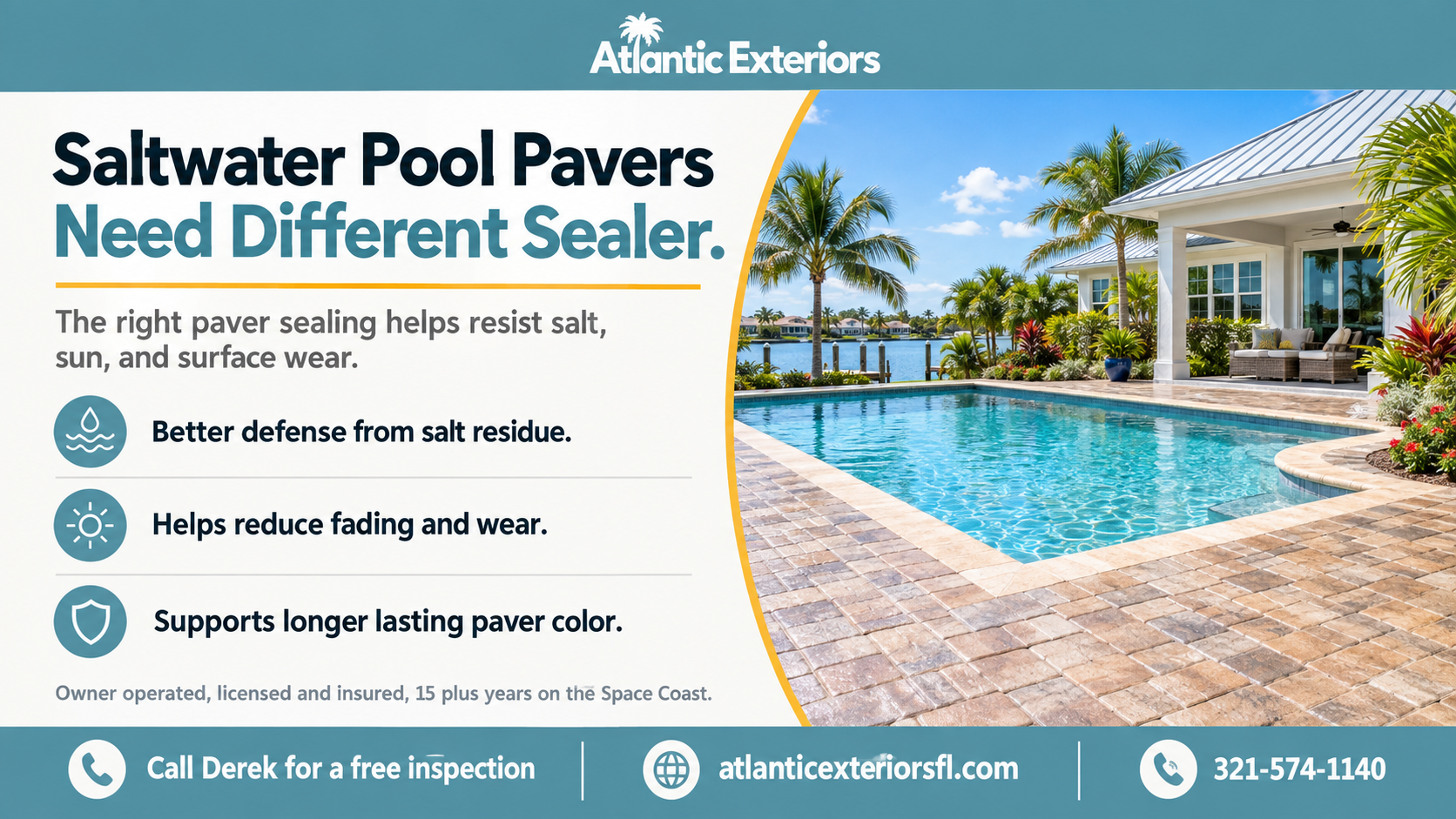
That is why pavers near a saltwater pool usually need a different sealer than a standard driveway or patio. The mix of salt, splash-out, summer UV, humidity, and afternoon thunderstorms can wear down the wrong sealer faster. Good paver sealing helps protect the surface, hold color better, and make routine cleanup easier.
If you are not sure what your pool deck pavers need, Derek at Atlantic Exteriors can take a look in person. He personally inspects every project, gives a written quote, and can walk you through the best option for your pool area. You can call Derek directly at (321) 574-1140.
Saltwater pools create a different kind of stress on pavers
A saltwater pool does not mean your pavers are sitting in ocean water. But it does mean the deck around the pool gets repeated exposure to salty splash-out and residue.
Over time, that matters.
Pavers near a saltwater pool often deal with:
- Salt left behind after water dries
- More frequent moisture around the deck
- Strong sun and heat on open pool areas
- Humid air that slows drying
- Rainy season wash-downs and afternoon storms
- Bare feet, lounge chairs, grills, and regular traffic
A regular sealer that may work fine on a driveway in Rockledge or a covered patio in West Melbourne may not hold up the same way around a pool. Pool deck pavers usually need a sealer chosen with that wet, sunny, salt-exposed setting in mind.
That does not mean every saltwater pool gets the exact same product. Paver age, shade, drainage, prior coatings, and overall condition all matter. Derek can walk you through this on the free inspection.
What the right paver sealing does near a saltwater pool
The main goal is not to make pavers bulletproof. No sealer can do that. The goal is to give the surface the right level of protection for the conditions it actually faces.
Better resistance to salt and moisture
Salt tends to stay behind on the surface after splashing and evaporation. A sealer suited for poolside paver sealing helps reduce how easily that moisture and residue work into the paver surface.
That can help with:
- Faster cleanup of light residue
- Less surface wear over time
- Better color retention
- More consistent appearance across the deck
A finish that fits a pool area
Around a pool, looks matter, but footing matters too. Some homeowners want a natural look with very little shine. Others want a richer color. The right choice depends on the paver type and the pool area itself.
This is one reason poolside paver sealing should not be treated exactly like driveway paver sealing. Around a pool, the finish has to make sense for that space.
More realistic life expectancy
In Brevard County, paver sealing typically lasts about 2 to 3 years. Around saltwater pools, it is often closer to 2 years because conditions are harsher. Covered areas may last longer than 3 years, but open pool decks usually take more abuse.
A good contractor should be honest about that. If someone makes it sound like one application will last forever, that is not realistic for the Space Coast climate.
Why local conditions on the Space Coast matter so much
Pool pavers in Cocoa Beach, Indialantic, Indian Harbour Beach, Melbourne Beach, and Cape Canaveral often deal with even more salt air on top of pool splash-out. Inland areas like Viera, Cocoa, and Palm Bay still get intense sun, humidity, pollen, and heavy summer rain.
All of that affects how a sealer performs.
Sun and UV wear sealers down
Open pool decks get full sun for long stretches. That constant UV exposure can wear down the wrong sealer faster and leave the pavers looking tired sooner than expected.
Rain and humidity change drying conditions
In Florida, especially during the wet season, timing matters. If pavers hold moisture or the weather window is poor, the final result can suffer. That is why an on-site inspection and proper scheduling matter.
Salt air adds another layer near the coast
Beachside homes often have two salt sources: the pool and the coastal air. That does not mean the job is a problem. It just means the paver sealing plan should match the environment.
Atlantic Exteriors handles this kind of work for homeowners and also for commercial properties with pool areas, courtyards, and outdoor common spaces. If you manage an HOA in Satellite Beach or a property in Merritt Island with pool deck pavers, Derek can inspect smaller areas around 500 square feet or larger commercial paver sealing projects up to about 20,000 square feet.
Signs your saltwater pool pavers may need resealing
A lot of homeowners wait until the pavers look very faded. By then, the surface may already be taking on more wear than it should.
Watch for signs like:
- Color looking dull or washed out
- Water soaking in instead of beading on the surface
- Light surface residue that seems harder to clean
- Uneven appearance across the deck
- Joint sand loss after rain or pool activity
These signs do not always mean the pavers need a full restoration, but they do mean it is worth having them checked.
Homeowners and commercial properties both benefit from early inspection
For homeowners, this can help protect a pool area that gets used every week. For commercial clients, it can help keep shared spaces looking cared for without waiting until the whole area looks worn down.
That applies to:
- HOA and property-manager paver sealing
- Storefront and business-entrance pavers near water features or outdoor seating
- Restaurant patios
- Commercial pool and courtyard areas
- Parking lot paver sealing where applicable on paver surfaces
Derek personally inspects every project and provides a written quote, so you know what shape the pavers are in and what makes sense next. Call Atlantic Exteriors at (321) 574-1140 to set up a free on-site inspection.
Choosing the right sealer is not a guess
The best sealer for pool deck pavers depends on a few real-world details:
- The type and age of the pavers
- Whether there is an older sealer on them now
- How much direct sun the area gets
- Drainage around the pool deck
- How close the property is to the coast
- Whether the surface is residential or commercial
This is where owner-operated service matters. You are not getting a one-size-fits-all answer from a call center. Derek looks at the actual pavers, explains what he sees in plain language, and recommends a paver sealing approach that fits your property.
Atlantic Exteriors is licensed and insured, and every job includes a free inspection, a written quote, and a post-project follow-up. If you have pool deck pavers in Melbourne, Cocoa Beach, Rockledge, Palm Bay, or anywhere in Brevard County, call Derek directly at (321) 574-1140.
FAQ
How often should pavers near a saltwater pool be sealed?
Usually around every 2 years is a good expectation for poolside pavers in Brevard County. Some may last a bit longer, but open pool decks usually wear faster than covered areas.
Can the same sealer used on my driveway be used around my pool?
Not always. Driveways and pool areas face different conditions. A saltwater pool deck usually needs a sealer selected for more moisture, more splash-out, and more sun exposure.
Do beachside homes need even more attention?
Often, yes. Homes in places like Satellite Beach, Indialantic, Indian Harbour Beach, and Melbourne Beach may deal with both pool salt and coastal salt air. That can make product choice and maintenance timing more important.
What should I do if I am not sure what was used last time?
That is common. Derek can inspect the pavers, look at the current condition, and explain your options during the free on-site visit.
If you want honest advice about paver sealing around your saltwater pool, call Derek at Atlantic Exteriors at (321) 574-1140. He serves homeowners and commercial properties across Brevard County and the Space Coast. You can also learn more at https://www.atlanticexteriorsfl.com, but the easiest next step is to pick up the phone and talk with Derek directly.