Why pavers turn green or black before Paver Sealing
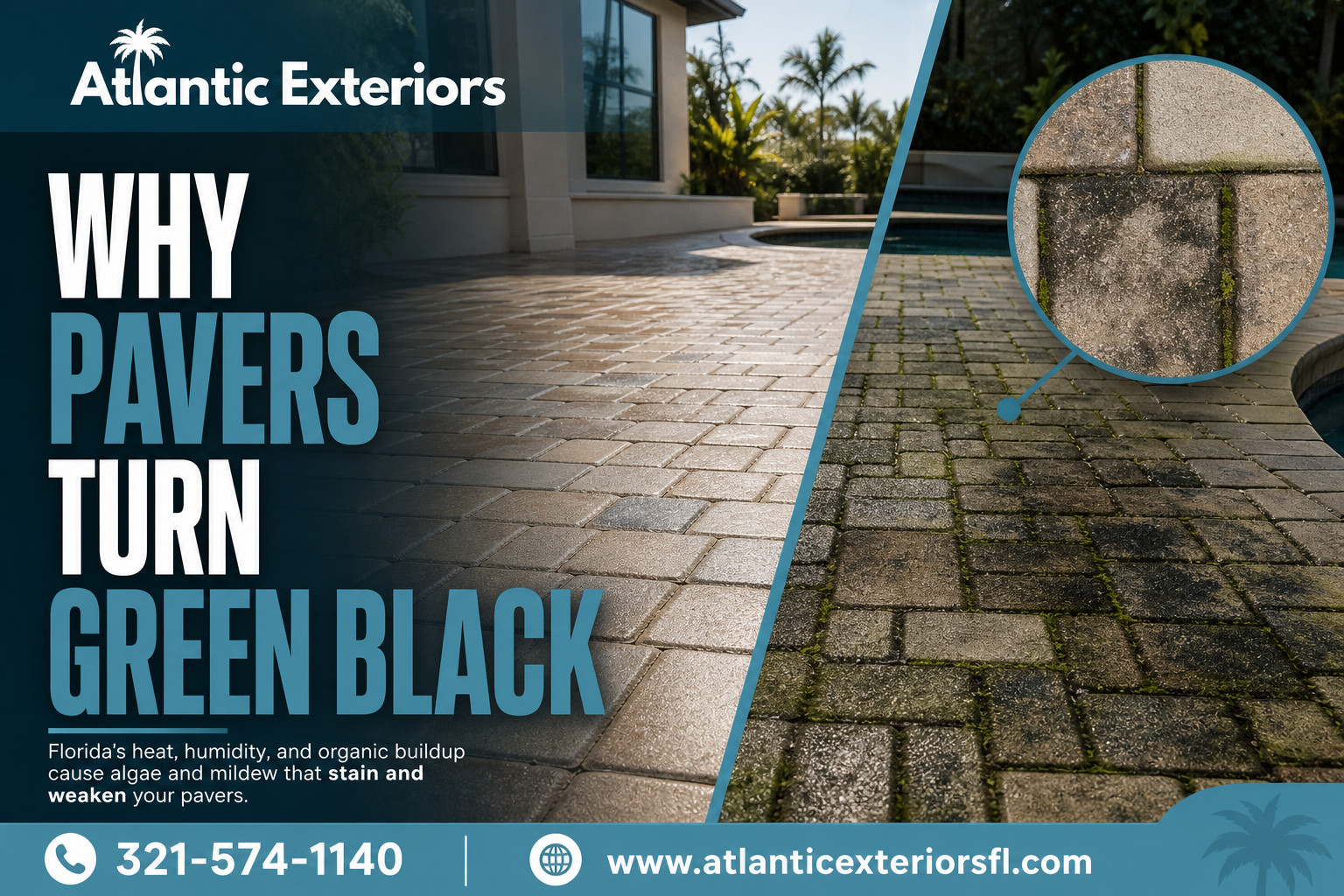
If your pavers are turning green or black, you are not imagining it. It is a common problem across Brevard County, especially on older driveways, patios, walkways, and pool deck pavers.
In Florida, moisture hangs around. Add shade, humidity, pollen, salt air, and afternoon thunderstorms, and pavers can start looking dirty fast. Before Paver Sealing, it is important to understand what that color change usually means and why it should be handled the right way.
At Atlantic Exteriors, Derek personally inspects every project. If you are in Melbourne, Palm Bay, Viera, Rockledge, or nearby, you can call Derek directly at (321) 574-1140 for a free on-site inspection and written quote.
The most common reason pavers turn green or black
Most of the time, green pavers are caused by organic growth. That usually means algae, mildew, or similar surface growth that likes damp, shaded areas.
Black discoloration can be a little different. Sometimes it is heavier mildew or built-up grime. Sometimes it is old sealer breaking down and trapping dirt. Sometimes it is a mix of both.
Florida creates the perfect setup for this:
- High humidity
- Frequent rain and afternoon storms
- Shade from trees, fences, or the house
- Pollen and organic debris sitting on the surface
- Poor drainage that keeps pavers damp longer
- Salt air in coastal areas like Satellite Beach, Indialantic, Indian Harbour Beach, Melbourne Beach, Cocoa Beach, and Cape Canaveral
The color itself is the warning sign. It tells you the pavers are holding moisture, collecting buildup, or both.
Why it often shows up before sealing time
A lot of homeowners notice green or black pavers right around the time they start thinking about Paver Sealing. That makes sense.
Most paver surfaces in Brevard County need resealing every 2 to 3 years. Pavers around your pool are often closer to 2 years because they deal with more moisture, foot traffic, and sun. Covered patios can sometimes go beyond 3 years.
As the old sealer wears down, the surface becomes more exposed. Water can soak in more easily. Dirt sticks more. Organic growth gets a better foothold.
So when a driveway in West Melbourne or a patio in Merritt Island starts looking darker, patchy, or green in spots, that is often a sign the surface is due for inspection. It does not always mean the pavers are damaged, but it does mean they should be looked at before new sealer is applied.
Shade and moisture are a big part of it
Some areas stay wet longer than others. North-facing walkways, pool deck pavers near screened enclosures, and patios under trees are common trouble spots.
If the sun does not hit the surface for long, moisture lingers. That gives algae and mildew time to grow. In places like Titusville, Cocoa, and Melbourne Beach, the pattern is usually the same. The darkest areas are often the ones that dry the slowest.
Why sealing over green or black pavers is a bad idea
Paver Sealing should protect and improve the surface. But sealing over contamination can lock in the problem.
If algae, mildew, or failing sealer is still there, new sealer may not bond the way it should. The finish can look uneven. Dark spots can show through. In some cases, the surface may continue to discolor underneath.
That is why prep matters so much.
At Atlantic Exteriors, the goal is not to rush to the sealing step. The goal is to inspect the pavers, figure out what is causing the discoloration, and recommend the right path. Some surfaces need cleaning and drying time. Some need repair and restoration first. Some have old sealer that needs special attention.
Derek can walk you through this on the free inspection. If you want a straight answer about what your pavers need, call Derek directly at (321) 574-1140.
What homeowners can do to help prevent it
You cannot change Florida weather, but you can reduce the conditions that make pavers turn green or black.
Simple steps that help
- Sweep off leaves and pollen regularly
- Rinse away debris before it sits too long
- Trim back plants that keep pavers in constant shade
- Watch for sprinkler overspray
- Keep an eye on drainage after heavy rain
- Address worn sealer before the surface stays exposed too long
These small things help, especially during summer when humidity is high and afternoon storms are common.
Still, routine care only goes so far. If the pavers already look blotchy, dark, slick, or stained with organic growth, it is better to have them inspected before trying to cover the issue with fresh sealer.
When discoloration may point to a bigger problem
Not every black area is just surface growth. Sometimes the issue is related to the condition of the paver system itself.
That can include:
- Sand joints that have washed out
- Areas that stay low and hold water
- Previous sealer wearing unevenly
- Surface buildup from years of exposure
- Pavers that need repair and restoration before sealing
This is especially common on older homes in Palm Bay, Rockledge, Viera, and Indian Harbour Beach where the pavers have been through years of summer UV, hurricane season rain, and changing maintenance habits.
A free on-site inspection helps separate a normal cleaning issue from a restoration issue. Atlantic Exteriors is licensed and insured, and every project includes a written quote and a post-project follow-up.
Florida homes need a Florida-specific approach
Pavers in Brevard County deal with conditions that homeowners in other states do not. The combination of heat, humidity, salt air, storms, and strong sun is hard on exterior surfaces.
A driveway in Melbourne may fade and darken differently than a covered patio in Viera. Pool deck pavers in Cocoa Beach or Satellite Beach may show organic growth faster because of moisture and coastal exposure. A shaded walkway in Merritt Island may stay damp longer than a sunny driveway in West Melbourne.
That is why Paver Sealing should never be treated like a one-size-fits-all job. The prep, timing, and condition of the surface all matter.
Derek has more than 15 years of paver experience, and he personally inspects every project. If you are seeing green or black areas and want honest guidance, call Derek directly at (321) 574-1140.
FAQ
Why do my pavers turn green so quickly in Florida?
Usually because of moisture, shade, humidity, and organic buildup like pollen or leaves. In Brevard County, those conditions are very common, especially during rainy months.
Can you seal pavers if they are already green or black?
They should be properly inspected and prepped first. Sealing over algae, mildew, dirt, or failing sealer can lead to poor results. Derek can explain what your surface needs during the free inspection.
How often should pavers be sealed in Brevard County?
Most pavers need Paver Sealing every 2 to 3 years. Pavers around your pool are often closer to 2 years, while covered patios can sometimes last beyond 3 years.
Do you provide inspections and quotes?
Yes. Atlantic Exteriors provides a free on-site inspection, a written quote, and post-project follow-up. If you are in Melbourne, Palm Bay, Titusville, Cocoa, Indialantic, or anywhere in Brevard County, call Derek directly at (321) 574-1140.
If your pavers are turning green or black, a quick phone call can save you guesswork. Atlantic Exteriors provides owner-operated Paver Sealing and restoration across Brevard County. Visit https://www.atlanticexteriorsfl.com to learn more, then call Derek directly at +13215741140 to schedule your free inspection.