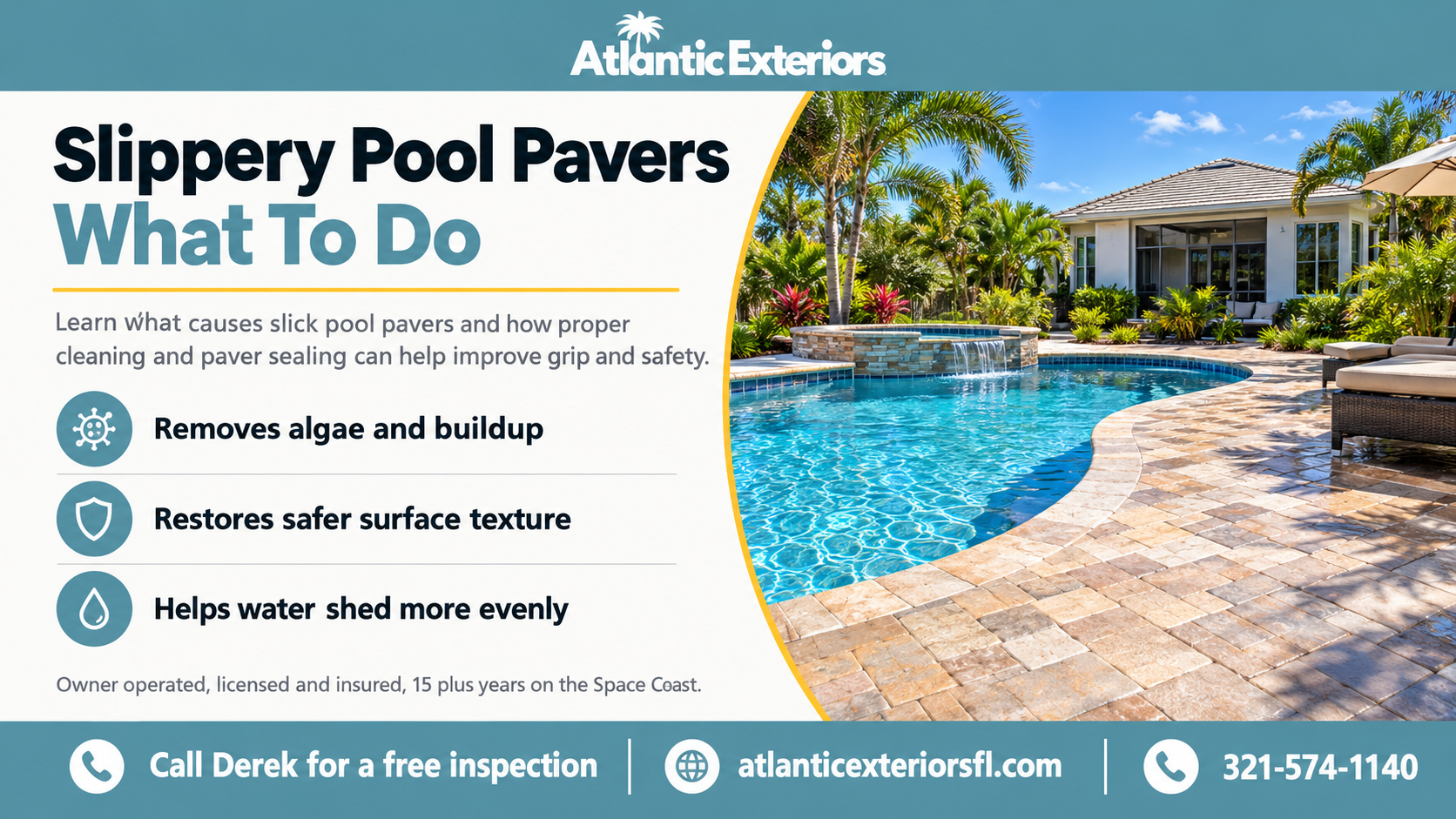
Why pool area pavers feel slippery and what to do
Brevard County pool owners deal with a mix of sun, humidity, salt air, pollen, and afternoon rain. On the Space Coast, that mix can make pool deck pavers feel more slippery than they should.
If your pool area in Melbourne, Palm Bay, Viera, Rockledge, Merritt Island, Satellite Beach, Indialantic, Indian Harbour Beach, Melbourne Beach, Cocoa Beach, Cocoa, Cape Canaveral, Titusville, or West Melbourne feels slick under bare feet, there is usually a clear reason. The good news is that it can often be improved with the right cleaning, repair, and Paver Sealing plan.
At Atlantic Exteriors, Derek Perreira personally inspects every project. If you want a straight answer about your pool deck pavers, call Derek directly at (321) 574-1140.
Why pool deck pavers get slippery
Most slippery pool areas are not caused by one single thing. It is usually a combination of buildup, moisture, wear, and the wrong surface condition.
Common causes include:
- Algae or mildew growing in shady or damp spots
- Sunscreen, body oils, and pool splash leaving residue
- Pollen and fine dirt sitting on the surface
- A sealer that has worn unevenly
- A sealer that is too heavy or not right for the area
- Settled or loose pavers that hold water
- Poor drainage that keeps parts of the deck wet longer
Around pools, pavers stay damp more often than a driveway or front walk. Add Brevard County humidity and summer storms, and slick spots can show up fast.
This is true for homeowners and for commercial properties too. HOA pool decks, apartment common areas, hotel-style courtyards, and restaurant patio pavers near water features can all develop the same problem.
It is not always “the sealer”
A lot of people assume slippery pavers mean the sealer is bad. Sometimes that is true. But not always.
Buildup is often the real issue
If the surface has algae, mildew, pollen film, or oily residue, it can feel slick even if the pavers themselves are fine. This is especially common in shaded areas, under screen enclosures, near planters, and along the waterline side of the deck.
Worn pavers can also change traction
Older pool deck pavers may lose some of their original texture over time. If they have years of foot traffic, sun exposure, and repeated wet-dry cycles, they can feel smoother than they used to.
Drainage matters more than most people think
Low spots can hold water. Water that sits too long invites algae and makes the area feel slick day after day. In some cases, paver repair and restoration is part of the fix, not just Paver Sealing.
If you are not sure what is causing it, Derek can walk you through this on the free inspection. Atlantic Exteriors provides a free on-site inspection, a written quote, and a post-project follow-up on every job.
What to do if your pool pavers feel slippery
The right fix depends on the cause. A quick rinse is rarely enough if the surface problem keeps coming back.
1) Start with a close inspection
Look for patterns:
- Is the slick area always in shade?
- Does it happen near the pool edge only?
- Are there dark spots or green film?
- Do some pavers stay wet longer than others?
- Does the surface look shiny in patches and dull in others?
Those clues help show whether you are dealing with buildup, drainage, uneven wear, or an old sealer.
2) Clean off surface residue
Pool decks collect more than dirt. They also collect:
- Sunscreen
- Drinks and food spills
- Leaf tannins
- Pollen
- Salt residue near beachside homes
A proper cleaning can make a big difference before any sealing work is considered.
3) Check for loose, low, or damaged pavers
If water is pooling, the pavers may need repair or resetting in certain areas. This is common on older pool decks and on larger properties where sections have settled over time.
4) Re-seal when the surface is ready
Paver Sealing can help protect pool deck pavers and make ongoing care easier, but it needs to be done correctly for the setting. Around pools, the goal is protection and a clean, even finish without creating an overly slick feel.
Pool area pavers usually need attention a little sooner than other areas. In general, Paver Sealing lasts about 2 to 3 years, while pavers around your pool are often closer to 2 years because of water, sun, and constant use.
If you want Derek to take a look, call (321) 574-1140. He handles small residential pool decks and large commercial paver sealing projects up to about 20,000 square feet.
How Paver Sealing helps around your pool
When done at the right time and in the right condition, Paver Sealing helps in a few important ways.
It helps reduce deep surface staining
Pool decks see a lot of traffic. Wet feet, planters, leaves, food, and everyday use all leave their mark. Sealing helps limit how much that surface wear sinks in.
It can make routine maintenance easier
Sealed pavers are often easier to keep clean because residue stays more on the surface instead of soaking in as quickly.
It helps protect the pavers from Florida weather
On the Space Coast, pavers take a beating from UV, rain, humidity, and salt air. Sealing helps protect against that steady wear.
It can improve the overall condition of the deck
If your pool area looks faded, patchy, or tired, cleaning and sealing pavers near your pool can freshen the look while helping protect your investment.
For commercial properties, this matters too. Commercial paver sealing around HOA pools, condo decks, storefront courtyards, and business common areas helps keep the space looking cared for and easier to maintain.
When it is time to call a pro
If your pool pavers are slippery more than once in a while, it is worth having them inspected. That is especially true if:
- The slick feeling keeps returning
- You see green or black growth in the joints or surface
- Water sits in the same areas after rain
- The finish looks uneven or blotchy
- Some pavers are moving, rocking, or sinking
- The deck has not been sealed in a few years
Atlantic Exteriors is licensed and insured, and Derek personally inspects every project. He works with homeowners across Brevard County and with commercial clients like HOAs, property managers, restaurants, and storefronts.
Whether you have a 500-square-foot pool deck in Satellite Beach or a much larger commercial paver sealing job in Viera or Titusville, you can call Derek directly at (321) 574-1140 for a clear, honest opinion.
Simple habits that help reduce slippery spots
You cannot stop every slick spot forever, especially in Florida weather. But a few habits can help:
- Rinse off heavy pollen and debris sooner rather than later
- Trim back plants that keep the deck shaded and damp
- Watch for low spots after storms
- Clean up food and drink spills around seating areas
- Keep an eye on how long water sits after pool use or rain
- Have the pavers inspected before the surface gets too far gone
Small issues are usually easier to deal with than long-term buildup or settled areas.
FAQ
Why do my pool pavers feel slippery even when they look clean?
A thin film of sunscreen, pollen, mildew, or moisture can make pavers feel slick even if they do not look dirty. An inspection usually helps narrow down the cause.
Does Paver Sealing make pool deck pavers slippery?
Not by itself when the pavers are properly prepared and the project is handled correctly for a pool setting. Problems are more likely when there is buildup, uneven wear, or the wrong surface condition. Derek can explain what makes sense for your deck during the free inspection.
How often should pool area pavers be sealed in Brevard County?
Most pool deck pavers are closer to about 2 years, though some conditions vary. Covered areas may last longer, while full sun, heavy use, salt air, and frequent moisture can shorten that timeline.
Can Atlantic Exteriors handle larger HOA or commercial pool areas?
Yes. Atlantic Exteriors handles both residential and commercial paver sealing, from smaller home pool decks to larger HOA, property-manager, and business projects up to about 20,000 square feet.
If your pool area pavers feel slick, Atlantic Exteriors can help you figure out why and what makes sense next. For a free on-site inspection, written quote, and honest advice, call Derek directly at (321) 574-1140 or visit https://www.atlanticexteriorsfl.com. A quick phone call is the easiest place to start.