Why pool pavers fade faster than the rest of your patio
In Brevard County and across the Space Coast, it is common to see pavers around a pool fade faster than the rest of the patio. Homeowners in Melbourne, Palm Bay, Viera, Rockledge, Merritt Island, Satellite Beach, and nearby areas ask about this all the time.
The short answer is simple. Pool deck pavers take more abuse.
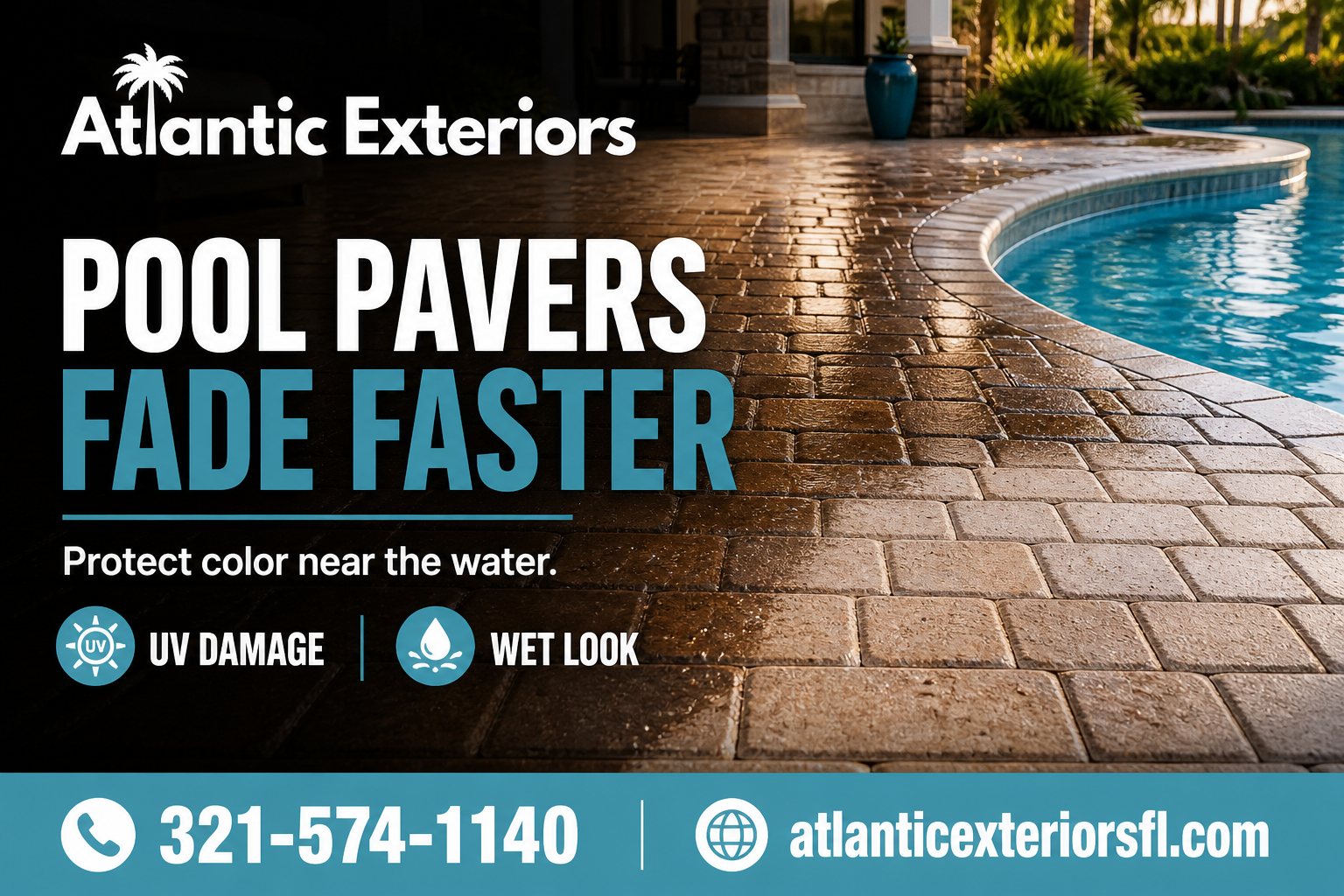
They get stronger sun, more water, more chemical exposure, more bare-foot traffic, and more frequent cleaning. All of that adds up. If the pavers are not protected with the right paver sealing schedule, the color can dull sooner than the rest of the outdoor space.
At Atlantic Exteriors, Derek Perreira personally inspects every project. If you want a clear answer for your own pool area, you can call Derek directly at (321) 574-1140 for a free on-site inspection and written quote.
Why pool deck pavers take a beating
A pool area looks open and bright, which is great for enjoying the yard. But that same open layout usually means more direct sun for more hours of the day.
On the Space Coast, summer UV is strong. Add heat, humidity, afternoon thunderstorms, and salt air near places like Cocoa Beach, Cape Canaveral, Indialantic, Indian Harbour Beach, Melbourne Beach, and Satellite Beach, and the wear shows up faster.
The main reasons color fades sooner near a pool
- Constant sun exposure
- Water splashing and sitting on the surface
- Pool chemicals carried out by swimmers
- More frequent rinsing and cleaning
- Wet feet, chairs, toys, and daily traffic
- Mildew, pollen, and organic buildup that lead to extra washing
Each one may seem small on its own. Together, they speed up wear on both the pavers and the sealer.
Water and chemicals wear down the surface faster
Pool water is one of the biggest reasons these pavers age differently from a covered patio or a side walkway. Even when the pool is well maintained, splashing happens every day.
That repeated wet-dry cycle matters. Water lands on the pavers, dries in the sun, then comes back again. Over time, that can wear down the look of the surface faster than areas that stay dry most of the week.
Chlorine and salt can both play a role
Some pools use chlorine. Some use salt systems. Either way, trace residue can end up on the pavers from splash-out, wet feet, and cleaning around the waterline.
That does not mean your pool is harming the pavers overnight. It means the area around the pool simply needs more attention than the rest of the patio. Derek can walk you through what he sees during the free inspection if you are not sure whether your fading is from sun, water, old sealer, or a mix of all three.
This is one reason paver sealing around your pool usually does not last as long as paver sealing on a covered lanai. In general, paver sealing lasts about 2 to 3 years, but pool deck pavers are often closer to 2 years because of the extra exposure.
Cleaning habits can make fading look worse
When pool pavers look dirty or slick, many people clean them more often than the rest of the patio. That makes sense. It is a safety and appearance issue.
But frequent aggressive cleaning can wear the surface faster, especially if the area is already overdue for paver sealing. Even normal rinsing, brushing, and weather exposure can make faded areas stand out more over time.
Fading is not always just lost color
Sometimes homeowners in West Melbourne, Titusville, Cocoa, or Merritt Island think the pavers themselves are ruined. In many cases, what they are really seeing is:
- Old sealer wearing away unevenly
- Surface dullness from sun and weather
- Mineral residue or chemical haze
- A strong contrast between shaded and unshaded sections
That is why an in-person look matters. Derek personally inspects every project, from a small 500-square-foot residential pool deck to larger commercial paver sealing work for HOAs, restaurants, storefronts, and property managers.
If you want an honest opinion on whether your pool deck needs cleaning, restoration, repairs, or fresh paver sealing, call Derek directly at (321) 574-1140.
Shade, layout, and drainage also affect color
Not every part of a patio ages at the same speed. The section around the pool is often the most exposed part of the whole yard.
A covered sitting area may hold its color longer. A walkway beside the house may get afternoon shade. But the pool edge usually gets full light, open sky, and regular moisture.
Small design differences matter
A few things can make one section fade faster than another:
- Southern or western sun exposure
- Poor drainage that leaves water sitting longer
- Areas near the pool entry or steps with heavier foot traffic
- Furniture that gets moved often and scratches the surface lightly over time
- Spots cleaned more often because they are most visible
Commercial properties see similar patterns. A hotel-style pool area, HOA pool deck, or restaurant courtyard with pavers near water features can fade faster than nearby walkways. That is why commercial paver sealing plans should match the actual use of the space, not just the square footage.
How paver sealing helps protect pool deck pavers
Paver sealing helps reduce how quickly the surface weathers. It can help the color look richer, slow down day-to-day wear, and make routine maintenance easier.
It is not magic, and it is not forever. But it is one of the best ways to protect pavers in Brevard County's climate.
Good timing matters
If you wait until the pool deck looks very dull, very dry, or uneven next to the rest of the patio, the area may need more than a simple reseal. Some projects also need paver repair and restoration first.
Atlantic Exteriors handles both. Derek will inspect the condition, explain what he sees in plain terms, and give you a written quote. Every project also includes post-project follow-up.
For many homeowners, the best approach is simple:
- Keep an eye on color loss around the pool edge
- Watch for uneven finish or a chalky, dry look
- Do not assume the whole patio needs the same schedule
- Have pool deck pavers checked closer to the 2-year mark
That same common-sense approach helps commercial clients too. HOA and property-manager paver sealing, storefront and business-entrance pavers, and even parking lot paver sealing all last differently based on traffic, sun, and water exposure.
When to call for a professional inspection
If your pool pavers look noticeably lighter than the rest of the patio, it is a good time to have them looked at. The sooner you know what is causing it, the easier it is to plan the right fix.
Atlantic Exteriors is licensed and insured, and Derek works on jobs of every size across the Space Coast. Whether you are in Melbourne Beach, Viera, Rockledge, Palm Bay, Cocoa Beach, or Titusville, you can call Derek directly at (321) 574-1140.
If you want straightforward advice on paver sealing around your pool, visit https://www.atlanticexteriorsfl.com and then pick up the phone. Derek personally inspects every project and will walk you through the best next step for your pool deck pavers.
FAQ
Why do pavers around my pool fade faster than my patio?
Usually because they get more sun, more water, more chemical exposure, and more cleaning than the rest of the patio. On the Space Coast, UV, humidity, and storms add even more wear.
How long does paver sealing last around a pool?
In most cases, about 2 years is a fair expectation for pool deck pavers. Other paver areas may last 2 to 3 years, and covered patios can sometimes go longer.
Can faded pool pavers be restored?
Sometimes yes, depending on the condition. Some areas may need cleaning, restoration, repairs, or fresh paver sealing. Derek can explain the best option during a free on-site inspection.
Do you handle larger pool areas for HOAs or businesses?
Yes. Atlantic Exteriors handles both residential and commercial paver sealing, from smaller home pool decks to larger HOA, storefront, restaurant, and property-manager projects up to about 20,000 square feet.