Why some pavers need lifting, resetting, then sealing
Some pavers do not just need a fresh coat of sealer. They need to be lifted, reset properly, and then sealed.
That may sound like extra work, but in many cases it is the honest way to fix the problem. If the pavers have shifted, settled, or started holding water, Paver Sealing alone will not correct the surface underneath.
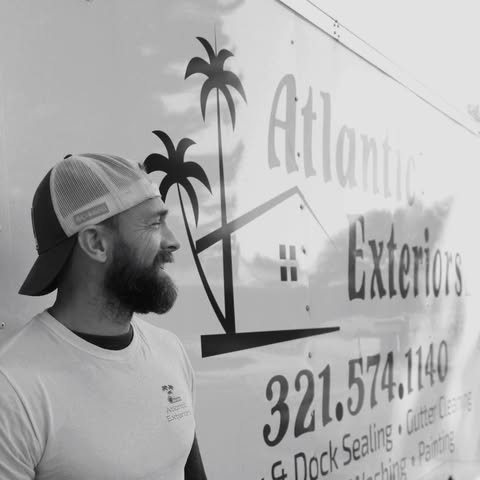
At Atlantic Exteriors, Derek personally inspects every project. If you are in Melbourne, Palm Bay, Viera, Rockledge, or anywhere in Brevard County, he will tell you straight whether your pavers are ready for sealing or whether part of the area should be reset first. You can call Derek directly at (321) 574-1140 for a free on-site inspection and written quote.
Why sealing is not always the first step
Paver Sealing is meant to protect and improve pavers that are structurally in decent shape. It helps with color enhancement, surface protection, and ongoing maintenance. But it is not a fix for movement, sinking, or poor drainage.
If a section of your driveway, patio, walkway, or pool deck pavers has dropped, rocking pavers may be present underneath. The base may have settled. Sand may have washed out. Edges may have loosened over time.
That happens a lot in Florida. Between heavy rain, afternoon thunderstorms, humidity, hurricane season, and years of sun exposure, paver surfaces in places like Merritt Island, Satellite Beach, Indialantic, and Melbourne Beach take a beating.
Sealing over those issues can lock in the problem instead of solving it.
Signs pavers may need to be lifted and reset
Here are some common signs Derek looks for during a free inspection:
- Low spots where water sits after rain
- Pavers that rock when you step on them
- Sunken edges near the driveway or patio border
- Uneven areas that create a trip hazard
- Gaps that keep opening back up
- Pool deck pavers that have shifted near drains or coping
- Areas where sand keeps washing out
If you are seeing one or more of these issues, Paver Sealing may still be part of the solution. It just should not be the first step.
What lifting and resetting actually does
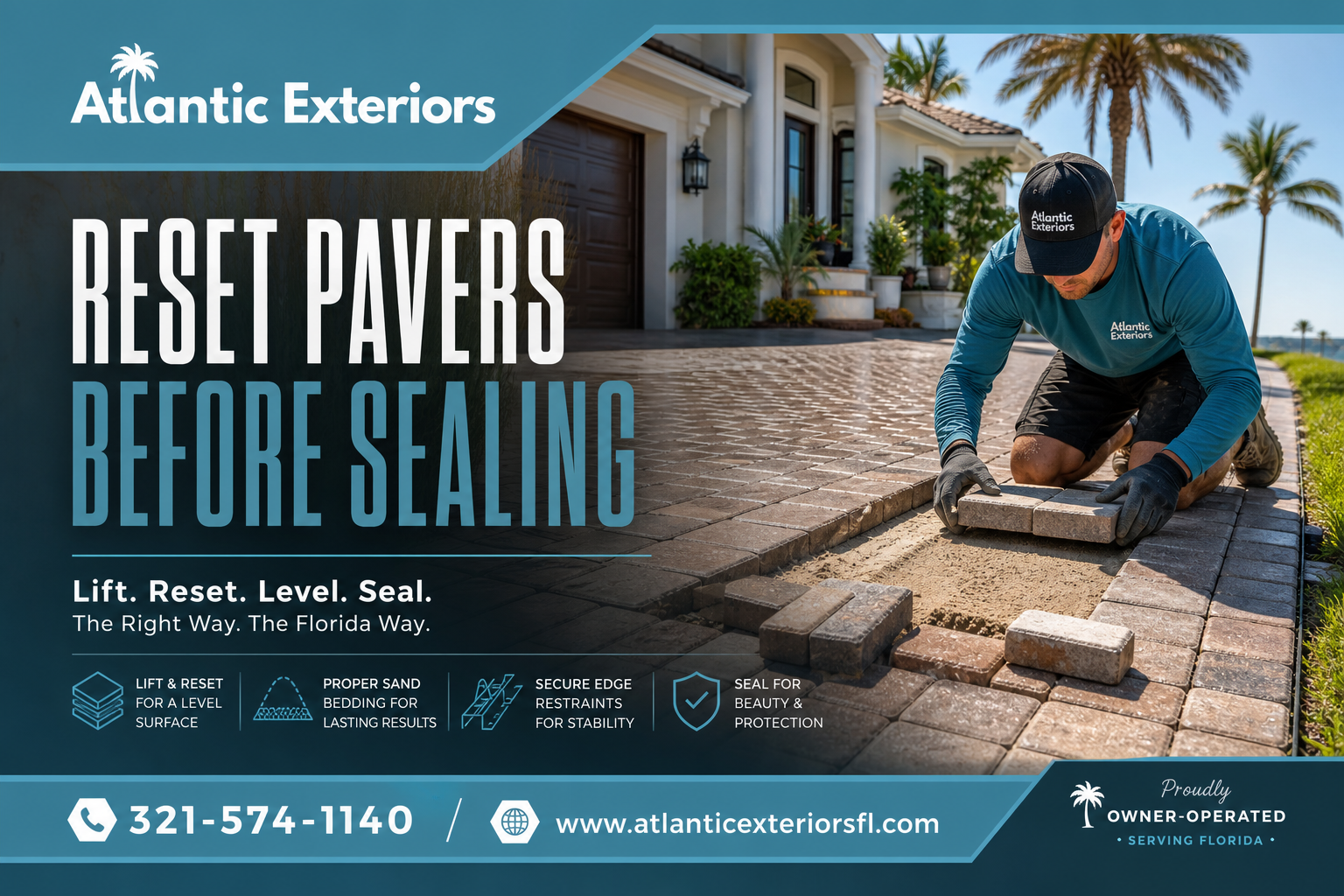
When pavers are lifted and reset, the goal is to correct the surface so it sits flatter, drains better, and feels solid underfoot.
That usually means removing the affected pavers, addressing the bedding layer underneath, re-leveling the area, and reinstalling the same pavers if they are still in good shape. Once that section is stable again, the surface can be cleaned, sanded, and prepared for Paver Sealing.
This matters because sealer performs best on pavers that are dry, stable, and properly set. If the pavers are moving, the finished result will not hold up the way it should.
Why this is common in Brevard County
Brevard County homes deal with conditions that can shift pavers over time:
- Summer UV and heat expansion
- Frequent rain and runoff
- Humid conditions that keep surfaces damp longer
- Salt air in coastal areas like Cocoa Beach, Cape Canaveral, Indian Harbour Beach, and Satellite Beach
- Tree roots and organic buildup from pollen and debris
Even a well-installed paver surface can develop isolated low spots after years of weather. That does not mean the whole area needs replacement. Often, a targeted reset is enough.
If you are unsure how serious it is, call Derek directly at (321) 574-1140. He can walk the area with you and explain what he sees in plain language.
Why sealing after the reset matters
Once the pavers are properly reset, sealing helps protect the work and make future maintenance easier.
A good Paver Sealing job can:
- Help reduce surface wear from sun and rain
- Support joint sand stability
- Enhance the natural color of the pavers
- Make routine cleanup easier
- Help the surface age more evenly
For most outdoor pavers in Florida, sealing typically lasts about 2 to 3 years. Pavers near your pool are often closer to 2 years because of water, sun, and regular foot traffic. Covered patios can sometimes stretch beyond 3 years.
That is why the order matters. First fix the structure. Then protect the surface.
Sealing first can lead to frustration
Homeowners sometimes call after another company sealed pavers that were already uneven. The color may look better for a while, but the low spot still holds water. The loose paver still moves. The trip hazard is still there.
That is frustrating, especially when you were hoping sealing would take care of everything.
Atlantic Exteriors takes a more practical approach. If part of the surface needs paver repair and restoration first, Derek will say so. He is licensed and insured, and every project includes a free on-site inspection, a written quote, and a post-project follow-up.
Common areas where resetting comes before Paver Sealing
Some parts of a property are more likely to need repair before sealing.
Driveways
Driveways often settle where vehicles turn, park, or enter from the street. In West Melbourne, Cocoa, Titusville, and Palm Bay, it is common to see low tire-path areas or edge movement over time.
Patios and walkways
Patios and walkways can shift from drainage issues, root pressure, or years of erosion. A few uneven pavers may not seem like much at first, but they can spread if left alone.
Pavers around your pool
Paver sealing around your pool needs extra attention because water exposure is constant. Pool deck pavers can settle near drains, splash zones, or transitions between the deck and screen enclosure. If those areas are uneven, resetting first usually gives a better long-term result.
When a simple sealing job is enough
Not every project needs repairs first.
If your pavers are level, solid, and draining well, then a straightforward Paver Sealing service may be all you need. That is often the case for well-kept patios in Viera, driveways in Rockledge, or covered lanais in Melbourne where the surface has held up nicely.
The key is having someone inspect it honestly before work begins.
Derek personally inspects every project for that reason. If your pavers only need cleaning, sanding, and sealing, he will tell you. If a section should be lifted and reset first, he will explain why. Call (321) 574-1140 and you can talk to him directly.
FAQ
How do I know if my pavers need resetting or just sealing?
If you have loose pavers, low spots, standing water, or uneven sections, resetting may be needed before sealing. Derek can walk you through this on the free inspection.
Will sealing fix pavers that hold water?
No. Paver Sealing helps protect the surface, but it does not raise low areas or correct drainage problems. Those issues usually need paver repair and restoration first.
How long does Paver Sealing last in Florida?
Most paver sealing lasts around 2 to 3 years in Florida conditions. Pavers near your pool are often closer to 2 years, while covered areas can last longer.
Do you provide inspections in all of Brevard County?
Yes. Atlantic Exteriors serves homeowners across Brevard County, including Melbourne, Palm Bay, Viera, Rockledge, Merritt Island, Cocoa Beach, Cape Canaveral, Titusville, and nearby areas.
If your pavers look uneven, loose, or worn out, the best next step is a real conversation. Atlantic Exteriors offers free on-site inspections, written quotes, and follow-up after the work is done. Visit https://www.atlanticexteriorsfl.com or, better yet, call Derek directly at (321) 574-1140 to talk through your pavers and schedule an inspection.