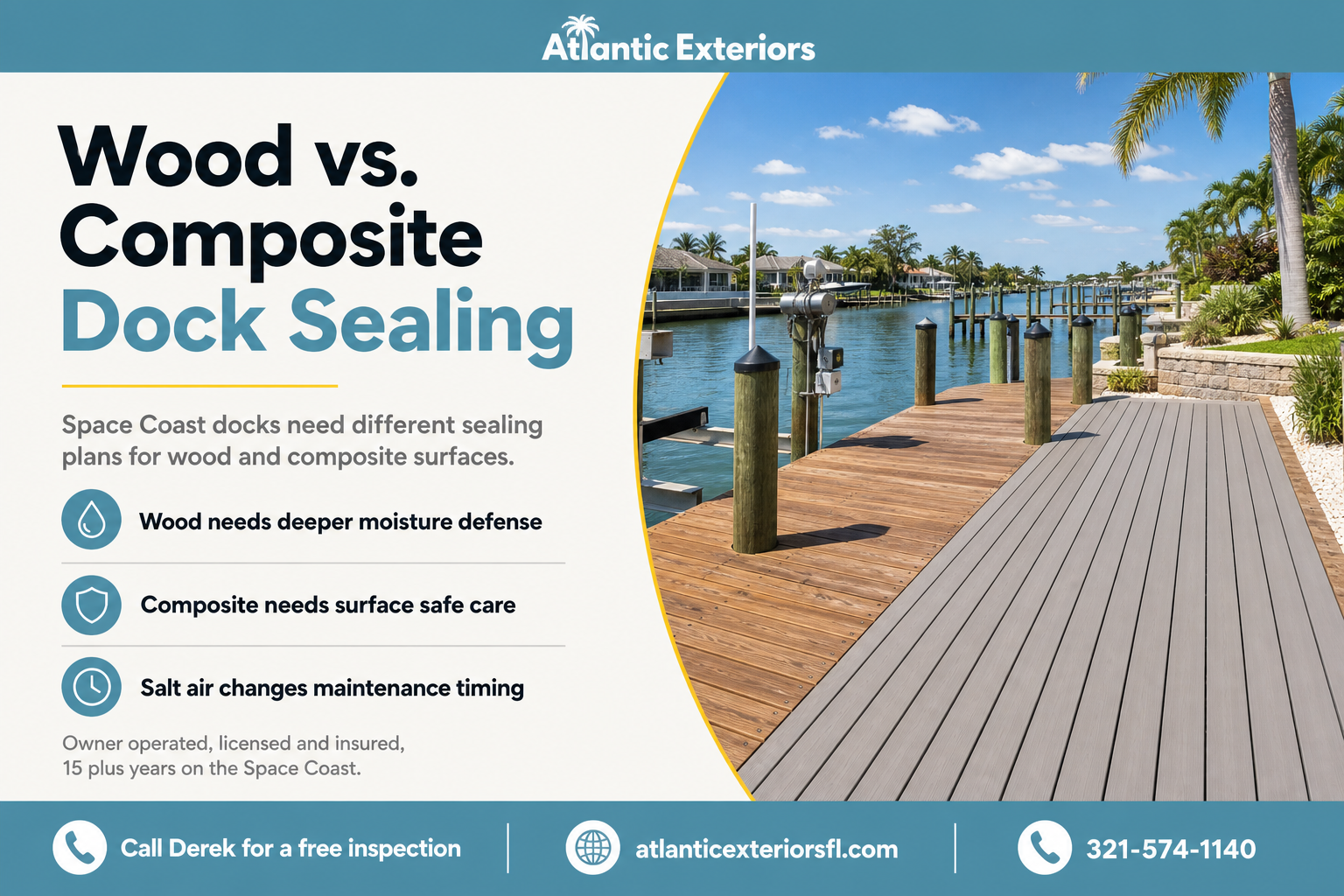
Wood vs. composite docks: sealing on the Space Coast
Brevard County dock owners deal with a rough mix of sun, salt air, humidity, rain, and storm season. From Merritt Island and Cocoa Beach to Melbourne Beach, Satellite Beach, and Titusville, that weather can be hard on any dock surface. The big question is simple: if your dock is wood or composite, does sealing work the same way?
Not exactly.
Wood docks and composite docks need different care. The right approach depends on the material, how much direct sun it gets, how close it is to salt water, and how much wear it sees from foot traffic, fishing gear, and day-to-day use. At Atlantic Exteriors, Derek personally inspects every project and explains what makes sense for your dock before any work starts. If you want a clear answer for your property, call Derek directly at (321) 574-1140.
Why dock sealing matters on the Space Coast
The Space Coast is beautiful, but it is not gentle on outdoor surfaces.
A dock in Palm Bay, Rockledge, Indian Harbour Beach, or Cape Canaveral sees long summer UV exposure, afternoon thunderstorms, high humidity, and months of salt in the air. During hurricane season, docks can also take extra abuse from wind-driven rain and debris. Over time, that can leave surfaces faded, dry, weathered, and harder to clean.
Dock sealing helps slow that wear.
For wood, sealing is often a key part of protecting the surface from moisture and sun. For composite, the goal is different. Some composite materials do not get sealed the same way wood does, and some should not be sealed at all. That is why a free on-site inspection matters. Derek can walk you through this on the free inspection and give you a written quote based on the actual material in front of him.
Atlantic Exteriors is licensed and insured, and every project includes a free inspection, a written quote, and a post-project follow-up.
How wood dock sealing works
Wood is the more traditional dock surface, and it usually needs more hands-on protection.
Wood is more porous
Wood takes in moisture more easily than composite. That matters in Brevard County, where humidity stays high and rain can come fast. A quality sealer helps reduce how much water the wood absorbs and helps it hold up better against daily exposure.
It can also help slow down:
- Fading from strong sun
- Surface drying and weathering
- Uneven color from water exposure
- General wear in high-traffic areas
That does not mean wood becomes maintenance-free.
Wood still moves with weather. It expands, dries, and ages. On older docks in places like Cocoa, Melbourne, or Merritt Island, boards may already show wear that needs to be looked at before sealing starts.
Prep matters on wood docks
A good result starts with proper prep.
The dock needs to be inspected for condition, cleaned the right way, and allowed to dry as needed before sealing. If boards are too worn, split, or unstable, Derek will tell you plainly. The goal is not to coat over problems. The goal is to protect a dock that is in sealable condition.
For homeowners, this is often about preserving a backyard feature you use every week. For commercial properties, HOAs, and waterfront businesses, it is also about keeping the dock area looking cared for and presentable.
If you manage a property with shared waterfront access, call Derek directly at (321) 574-1140 to discuss the layout and usage.
How composite dock sealing differs
Composite is different from wood in a few big ways.
Composite usually needs a different plan
Composite boards are made to handle moisture better than traditional wood. They do not absorb water the same way, and they do not always benefit from a sealer in the same way either. In some cases, sealing may be limited, unnecessary, or depend on the specific product and condition.
That is why it is important not to assume that “dock sealing” means the exact same process for every dock.
With composite, the main questions are often:
- What type of composite is it?
- How old is the surface?
- Is it faded, chalky, or stained in spots?
- Has anything been applied to it before?
- Is the dock in full sun or partly shaded?
Some composite docks around Viera, West Melbourne, or beachside communities may look dull from UV and salt exposure, but that does not automatically mean they need the same treatment as wood. Derek can identify what you have and explain the safest next step.
Composite still needs care
Even if composite does not call for traditional sealing in the same way, it still needs maintenance.
Foot traffic, fish residue, sunscreen, pollen, storm grime, and salt buildup can all affect how it looks. Waterfront restaurants, HOA common areas, and residential docks all benefit from a practical maintenance plan based on actual use.
That local, case-by-case approach is especially important for commercial clients. A small private dock and a larger shared-use waterfront space do not wear the same way.
Which dock material needs more upkeep?
In general, wood usually needs more ongoing attention than composite.
That is one reason some owners choose composite in the first place. But lower upkeep does not mean no upkeep. Composite can still fade, collect grime, and show weathering over time.
Wood often needs more frequent attention
Wood is usually the material that benefits most clearly from sealing. On the Space Coast, that can be important because of:
- Strong summer sun
- Salt air near the water
- Frequent rain and standing moisture
- Humid conditions that linger
A wood dock may need regular evaluation to stay ahead of wear.
Composite may need inspection more than sealing
Composite owners often need honest guidance more than a one-size-fits-all treatment. That is where an owner-operated company helps. Derek is not trying to force every surface into the same service. He personally inspects the dock and explains what fits the material and what does not.
That straight answer matters whether you own a home in Indialantic or Indian Harbour Beach, or manage a commercial property with public-facing waterfront areas.
What Space Coast property owners should look for
If you are not sure whether your dock needs service, start with visible changes.
Watch for:
- Fading or uneven color
- Dry, weathered-looking wood
- Surface grime that keeps coming back
- Areas that stay damp longer than they used to
- Heavy wear in walking paths or seating areas
- A dock that simply looks tired compared to the rest of the property
For homeowners, that may affect how much you enjoy the space.
For businesses and HOAs, appearance matters even more. Shared docks, business-adjacent waterfront areas, and community access points all leave an impression on guests, residents, and customers. While Atlantic Exteriors is best known for Paver Sealing, Derek also handles dock sealing for wood and composite docks with the same practical, detail-focused approach.
If you want a local opinion without guesswork, call Derek at (321) 574-1140. He serves Brevard County and can inspect projects large and small.
FAQ
Does every composite dock need sealing?
No. Composite docks do not always get sealed the same way wood docks do, and some may not need sealing at all. Derek can identify the material and walk you through the best option during the free inspection.
How often should a wood dock be resealed on the Space Coast?
It depends on sun, salt exposure, traffic, and the dock's condition. A dock in full sun near the water may wear faster than one with more cover. Derek can give you a realistic maintenance timeline after he sees it.
Do you work on both homes and commercial properties?
Yes. Atlantic Exteriors works with homeowners as well as HOAs, property managers, storefronts, restaurants, and other business clients across Brevard County. Derek handles jobs of many sizes and personally inspects every project.
How do I get an estimate for dock sealing?
Just call Derek directly at (321) 574-1140. Atlantic Exteriors provides a free on-site inspection, a written quote, and a post-project follow-up. You can also learn more about the company at https://www.atlanticexteriorsfl.com, but the easiest next step is to pick up the phone and call Derek.