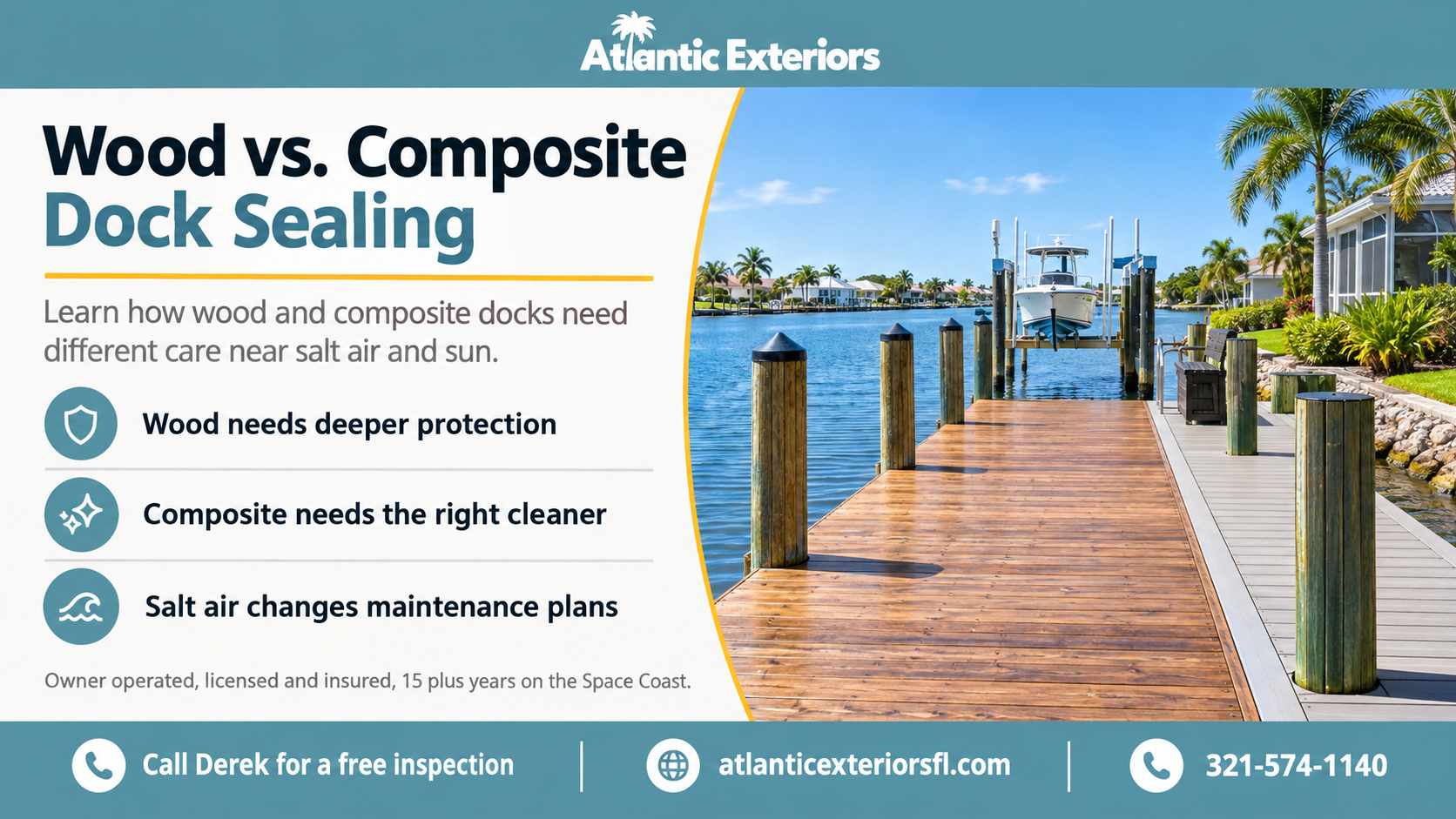
Wood vs. composite docks: sealing on the Space Coast
Brevard County docks take a beating. Between strong sun, salt air, humidity, afternoon storms, and hurricane season, dock surfaces on the Space Coast age fast.
If you own a home in Melbourne, Merritt Island, Satellite Beach, Cocoa Beach, or Titusville, you have probably seen it yourself. Boards fade. Surfaces get chalky. Water stops beading. And the dock starts looking older than it should.
The big question is simple: does sealing work the same way on wood and composite docks? Not really.
Wood and composite need different care. The right approach depends on the material, the dock’s exposure, and its current condition. Atlantic Exteriors handles dock sealing along with Paver Sealing and restoration work across Brevard County, and Derek personally inspects every project. If you want a clear answer for your dock, call Derek directly at (321) 574-1140.
Why Space Coast docks weather so differently
Dock surfaces here deal with more than just rain. On the Space Coast, materials are under steady stress from:
- Summer UV and heat
- Salt air near the river and beachside areas
- High humidity
- Afternoon thunderstorms
- Standing moisture after rain
- Wind-driven debris during storm season
That matters because not every dock ages the same way. A shaded dock in Rockledge may hold up differently than a full-sun dock in Indialantic or Melbourne Beach. A canal dock in Cape Canaveral may weather differently than a backyard dock farther inland in Palm Bay or West Melbourne.
This is why a one-size-fits-all answer usually falls short. Derek can walk you through what makes sense during the free on-site inspection.
How sealing wood docks is different
Wood is porous. It absorbs water, dries out, and moves with the weather. That is why wood dock sealing is usually more important and more noticeable than sealing a composite dock.
When a wood dock is in good shape, sealing helps slow down moisture intrusion and weathering. It can also help the wood keep a more even appearance over time. On the Space Coast, that matters because wet-dry cycles happen constantly.
What wood dock sealing is meant to do
A good wood sealer is generally there to help with:
- Water resistance
- UV exposure
- Slower fading and drying
- Easier routine maintenance
- Better overall appearance
It is not magic. It will not make old damaged boards new again. If boards are split, soft, loose, or badly worn, that is a separate issue. Derek will point that out honestly during the inspection.
When wood usually needs attention
Common signs include:
- Gray or faded boards
- Rough texture
- Dry, thirsty-looking wood
- Dark water spots that linger
- Uneven color from sun exposure
- Areas that stay damp longer than they should
For homeowners, this often starts with a small backyard dock or waterside platform. For commercial clients, it may be a marina-adjacent walkway, a restaurant’s dockside entrance, or a common-area waterfront feature managed by an HOA or property manager. Atlantic Exteriors handles small residential jobs and larger commercial projects alike.
How composite dock sealing differs
Composite is different from wood from the start. It is made to resist moisture better and usually needs less traditional sealing. In many cases, the goal is not the same as with wood.
Some composite products are not meant to be sealed the way natural wood is. Others may benefit from a surface treatment in certain conditions. That depends on the product, age, wear, and manufacturer guidance. If you are not sure what your dock material is, Derek can help identify it during the free inspection.
What owners should know about composite
Composite docks often have different issues than wood, such as:
- Surface fading from UV
- Mildew or grime buildup in shaded areas
- Slippery film from moisture and pollen
- Cosmetic wear in heavy-traffic spots
What they usually do not need is the exact same sealing process used on wood. Using the wrong product on composite can create problems instead of solving them. That is one reason local inspection matters.
For Space Coast homeowners, this is especially common in communities around Viera, Indian Harbour Beach, and Merritt Island where newer materials may have been installed years after the original home was built. For commercial properties, HOA boardwalk sections and business-adjacent waterfront areas may include mixed materials, which need a more careful plan.
If you want a straight answer before doing anything to the surface, call Derek directly at (321) 574-1140.
Wood vs. composite: which one needs more sealing?
In plain terms, wood usually needs more active protection. Composite usually needs more material-specific care.
Wood tends to benefit more clearly from sealing because it naturally takes in moisture. Composite is less absorbent, so the question is often less about “sealing” in the traditional sense and more about proper protection and maintenance for that specific product.
A simple way to think about it
Choose wood-focused sealing when:
- The dock is natural wood
- The boards look dry or weathered
- Water no longer beads on the surface
- The dock gets strong sun and rain exposure
Use extra caution with composite when:
- You are unsure of the product type
- The surface already has a factory finish
- The issue is dirt, film, or fading rather than absorption
- You do not want to risk changing the look or traction of the material
That last point matters. Docks need to stay practical, not just look better. A dock surface should never be treated casually.
Why local inspection matters on the Space Coast
Two docks can look similar and need very different care. That is why Atlantic Exteriors starts with a free on-site inspection, a written quote, and a post-project follow-up.
Derek personally inspects every project. He is licensed and insured, and he works with both homeowners and commercial clients across Brevard County. That includes everything from smaller residential areas to larger property needs tied to HOAs, storefronts, restaurants, and other business properties.
Even if your main need is Paver Sealing, many property owners ask about nearby dock surfaces at the same time. That is common for waterfront homes with paver patios, pool deck pavers, walkways, and docks all exposed to the same harsh weather.
A homeowner in Cocoa or Melbourne Beach may want to protect both the patio and dock in one overall maintenance plan. A property manager in Palm Bay or Rockledge may be looking at common-area surfaces across a larger site. Either way, the first step is the same: get the material checked in person.
Call Derek directly at (321) 574-1140 to talk through your dock, pavers, or both.
FAQ
Can you seal every composite dock?
Not always. Some composite materials are not meant to be sealed like wood. Derek can walk you through this on the free inspection.
How often should a wood dock be resealed on the Space Coast?
It depends on sun, moisture, and exposure. Waterfront conditions in Brevard County can be tough, so inspection matters more than guessing by the calendar.
Is dock sealing the same as Paver Sealing?
No. Paver Sealing and dock sealing are different services because the materials behave differently. The local weather affects both, but the treatment plan is not the same.
Do you handle larger commercial properties too?
Yes. Atlantic Exteriors works on small residential jobs and larger commercial projects as well, including HOA and property-manager needs across Brevard County.
If you are on the Space Coast and want honest guidance on a wood or composite dock, Atlantic Exteriors is here to help. Visit https://www.atlanticexteriorsfl.com for more about services, then call Derek directly at (321) 574-1140. He can inspect the dock, explain what makes sense, and give you a clear written quote.